Record heat, ice loss, and rust-stained rivers mark another year of Arctic change
The 20th Arctic Report Card highlights long-term trends and transformations in the region

Key points
- From October 2024 to September 2025, Arctic-wide surface air temperatures were the warmest in the 125-year record. At the same time, the Arctic experienced the highest amount of precipitation on record.
- Maximum sea ice extent observed in March 2025 was the lowest in the 47-year satellite record.
- Warm Atlantic waters penetrated several hundred miles into the central Arctic Ocean, near the North Pole, enhancing sea ice loss.
- Declines in commercially and ecologically important Arctic-affiliated species are disrupting North Pacific commercial fisheries, Arctic food security, and subsistence practices.
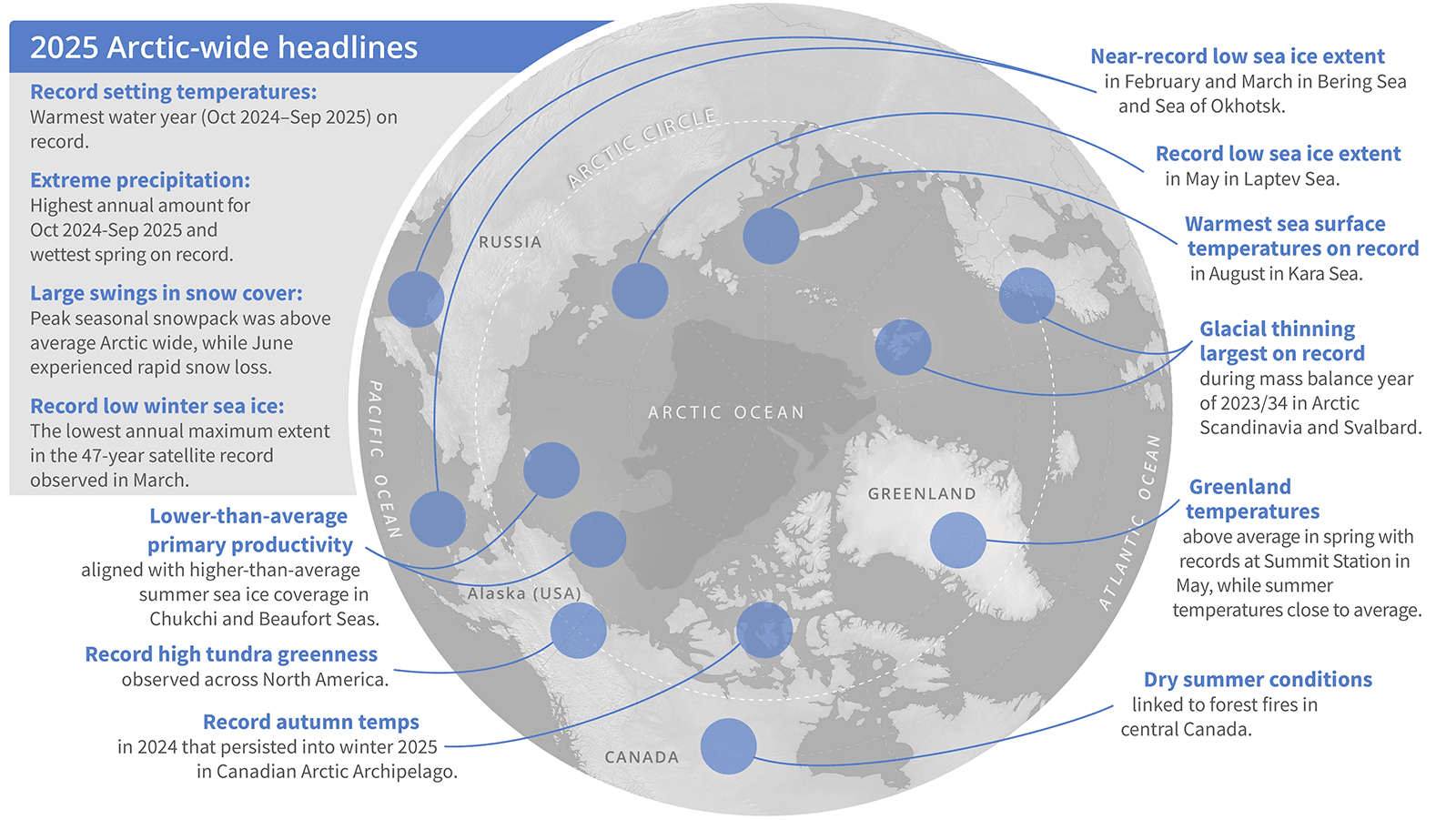
Key findings from the 2025 Arctic Report Card
Key findings from this year's Arctic Report Card highlight rising air and water temperatures, declines in sea ice, thinning glaciers and ice caps, and other changes.
Record heat, record low sea ice, shrinking glaciers, rivers turning rusty orange, a typhoon, and the continued warming of Arctic seas are just some of the disruptive changes reported from the north Polar region today in the 2025 Arctic Report Card.
For 20 years, this peer-reviewed report has tracked the rapid pace and complexity of the evolving Arctic. Steadily rising temperatures, vanishing ice, and unprecedented extreme weather events are transforming this once reliably frozen region into a warmer, wetter, and unpredictable world.
The 2025 Arctic Report Card presents new findings from 112 scientists from 13 countries, documenting ongoing trends, record-setting events, and emerging issues in Arctic lands and seas.
“This Arctic Report Card highlights how despite the vast distances, components of the Arctic system are both closely connected and rapidly changing,” said Matthew Druckenmiller, a CIRES senior scientist with the National Snow and Ice Data Center and lead editor of the report. “Sustaining long-term observations and sharing timely results are vitally important as changing Arctic conditions impact the well-being of Arctic residents and influence the global climate system itself.”
"CIRES scientists have been at the forefront of Arctic climate research for decades, providing critical observations that help us understand one of the planet's most rapidly changing regions," said CIRES Director Waleed Abdalati. "The Arctic Report Card represents the kind of sustained, collaborative science that creates a comprehensive picture of Arctic change no single organization could produce alone."
Key findings from this year’s Report Card
Steadily rising temperatures, fluctuating ice coverage, and broad, long-lasting unseasonal weather events are transforming this once reliably frozen region into a warmer, wetter world with unpredictable impacts on the Arctic’s complex ecosystem. Key findings of this year’s report show just how much change the Arctic has experienced since the report began 20 years ago. Notable findings include:
Air temperatures are rising
- Surface air temperatures across the Arctic from October 2024 to September 2025 were the hottest recorded since 1900.
- During the past year, the Arctic experienced its warmest autumn, second-warmest winter, and third-warmest summer.
- Since 2006, annual, autumn, and winter temperatures in the Arctic have increased more than twice as fast as the rest of the planet.
- The last 10 years are the 10 warmest years on record in the Arctic.
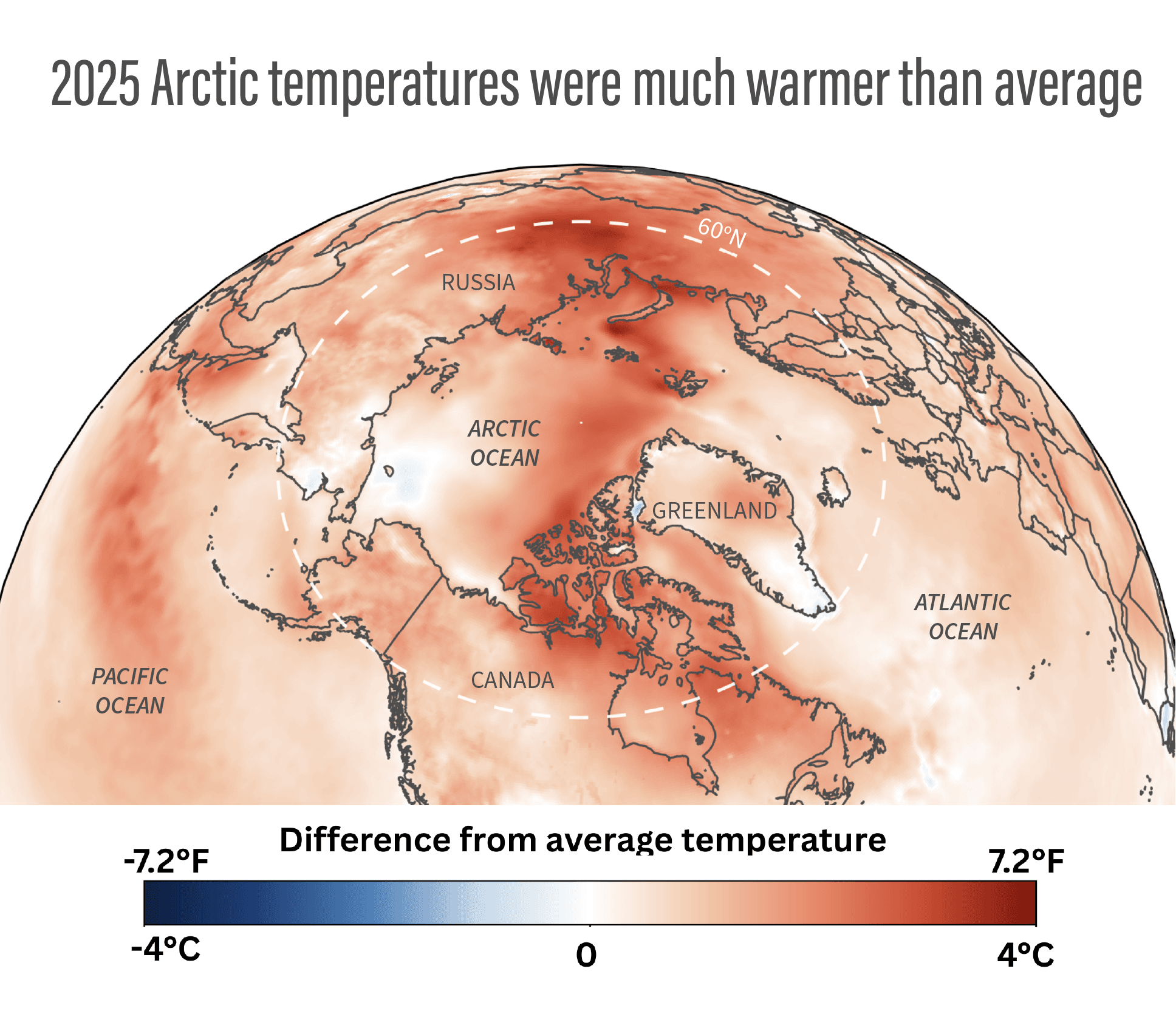
Arctic temperatures continue to warm
Temperatures across the Arctic continue to rise faster than the global average. Credit: NOAA and CIRES/University of Colorado Boulder.
Glaciers and ice sheets are shrinking
- The Greenland Ice Sheet lost 129 billion tons of ice in 2025, less than the annual average of 219 billion tons between 2003 and 2024, but continuing the long-term trend of net loss.
- Alaskan glaciers have lost an average of 125 vertical feet (38 meters) of ice since the mid-20th century.
- Ongoing glacier loss contributes to steadily rising global sea levels, threatening Arctic communities’ water supplies, driving destructive floods and increasing landslide and tsunami hazards that endanger people, infrastructure, and coastline.
Rivers are rusting
- In Arctic Alaska, iron and other elements released by thawing permafrost have turned pristine rivers and streams in over 200 watersheds orange over the past decade.
- The increased acidity and elevated levels of toxic metals degrade water quality, compromising aquatic habitat and impacting biodiversity in headwaters streams.

Rusting rivers in Alaska
Iron and other elements released by thawing permafrost have turned pristine rivers and streams in over 200 watersheds across Alaska orange over the past decade. Credit: University of Alaska Fairbanks.
Ocean temperatures are rising and sea ice is declining
- Scientists observed the lowest annual maximum Arctic sea ice extent in the 47-year satellite record in March 2025.
- The oldest, thickest ice has declined by more than 95 percent since the 1980s. Multi-year sea ice is now largely confined to the area north of Greenland and the Canadian Archipelago.
- In the coastal seas of the Arctic Ocean’s Atlantic sector, August sea surface temperatures were as much as nearly 13°F (~7°C) warmer than 1991 to 2020 August average values.
“It was remarkable this past year in the Arctic to see the occurrence of two records – both the hottest year on record and the year with the most precipitation ever observed,” Druckenmiller said. “To monitor and share what we are learning from the Arctic has never felt more urgent.”