Waleed Abdalati

Ph.D. University of Colorado (Boulder), 1996
Director of CIRES
Professor of Geography
E-mail: waleed.abdalati@colorado.edu
Office: Ekeley W245
Phone: 303-492-5086
Web: Earth Science Observation Center
Research Interests
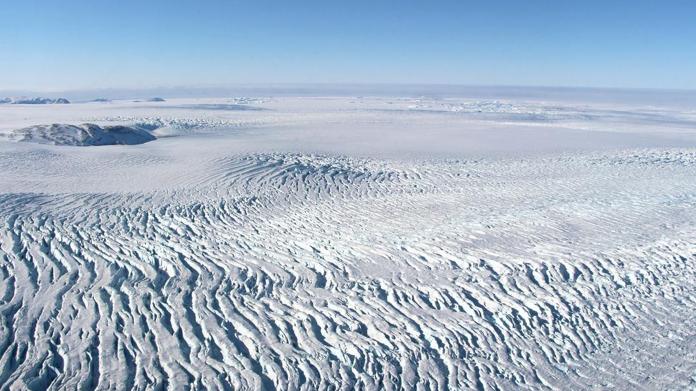
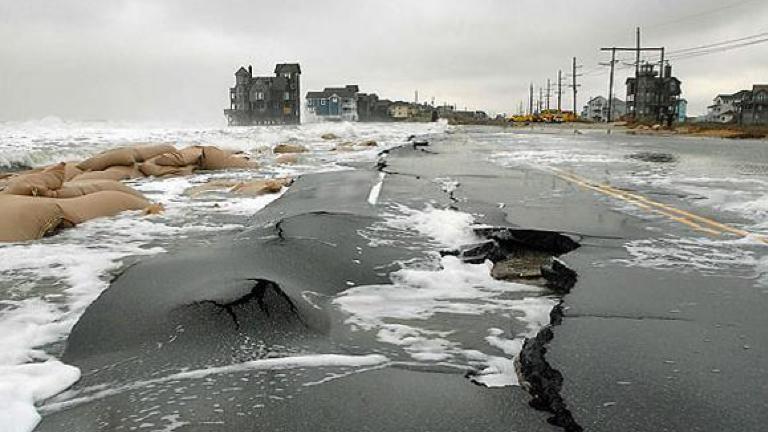
My research interests are in the use of satellite and airborne remote sensing techniques, integrated with in situ observations and modeling, to understand how and why the Earth's ice cover is changing, and what those changes mean for life on Earth. In particular, my research focuses on the contributions of ice sheets and high-latitude glaciers to sea level rise and their relationship to the changing climate. Toward that end, I have been heavily involved in the development of NASA's Ice Cloud and land Elevation Satellite (ICESat) and its successor, ICESat-II, and I have worked on cryospheric applications of various other satellites and aircraft instruments. Most of my research is supported by NASA, where I worked as a scientist for 12 years, before joining CIRES. In 2011, I returned to NASA on a two-year assignment as the agency’s Chief Scientist, serving as principal adviser to the NASA Administrator on NASA scienceprograms, strategic planning, and the evaluation of related investments.
Current Research: Studying Ice from Space
NASA’s planned Ice Cloud and land Elevation Satellite-2 (ICESat-2) mission is designed to significantly improve upon measurements begun by its predecessor, ICESat, to map changes in ice sheet elevation using space-based laser altimetry. I was involved with ICESat-2 from its inception, serving as the first leader of the science definition team until 2010, and continue to work with students and members of the team to help define and determine thescience capabilities of the mission.
The objectives of ICESat-
2 are to 1) quantify
the contributions of the
Greenland and Antarctic ice sheets to sea-level rise, and
provide key insights into the underlying mechanisms; 2)
assess the thickness of the Earth’s sea-ice cover to improve
our understanding of the exchanges of moisture and energy
among the oceans, ice, and atmosphere; and 3) map
global land biomass to quantify its carbon storage.
Satellite observations of recent dramatic changes in the
Earth’s polar ice cover have transformed our thinking
about polar ice since the original ICESat mission was
developed. As a result, the ICESat-2 mission must be designed
to capture the very rapid changes of outlet glaciers,
observe the impacts of summer speedup of ice flow due
to the penetration of surface meltwater to the ice sheet
bottom, and examine the detailed character of the rapidly
thinning Arctic sea-ice cover. All of these require new
observations and rigorous analyses of various observation
strategies. Maximizing the capabilities of the mission to
achieve these multiple objectives poses significant challenges
to optimal design.
I am also working with data from the Gravity Recovery
and Climate Experiment (GRACE), airborne laser altimetry,
ice-penetrating radar, and various other satellite observations.
GRACE measures changes in the Earth’s gravity
field, which are used to infer ice-sheet mass changes and
evolution with time. The airborne laser altimetry provides
high-resolution measurements of ice sheet changes to
complement those made by satellites to better understand
outlet glacier changes. Ice-penetrating radar observations
provide information on the geometry of the bedrock over
which these glaciers flow, enabling better understanding
of the controls on glacier discharge. The other satellite observations
provide insights into the ice flow, ice melt, and
ice deformation processes.
Using these tools, I am working to understand the behavior of glaciers and ice sheets and the mechanisms that control them. My primary focus is on Greenland, however, my research interests are also on the Canadian ice caps and the Antarctic Ice Sheet. My ultimate research objectives are to determine how and why the Earth’s glaciers and ice sheets are changing, and what the implications are for sea-level rise
Publications
Click here for a list of publications »
Honors and Awards
- Selected to serve as NASA Chief Scientist, 2011–2012
- NASA GSFC Center Director’s Team Recognition Award, 2007
- American Institute of Aeronautics and Astronaustics Space Systems Award, 2006
- National Aeronautics and Space Administration Exceptional Service Medal, 2004
- NASA Group Achievement Award, ICESat Science Team, 2004
- NASA Office of Earth Science Award, 2003
- NASA Group Achievement Award, Honor Award Team 2003
- NASA Office of Earth Science Terra Peer Award, 2002
- NASA Office of Earth Science Award, 2002
- NASA Office of Earth Science Award, 2001
- Presidential Early Career Award for Scientists and Engineers, 1999
- Tau Beta Pi National Engineering Honor Society (since 1985)