Roger Bilham
Professor Emeritus of Geological Sciences
- Ph.D., Cambridge U.K., 1971
Research Interests
I am a research scientist in CIRES with interests in earthquake, landslide, flood and volcano processes and their impact on society. I use various terrestrial and remote sensing geodetic methods to capture the deformation of the Earth's crust, and engineering and historical investigative methods to quantify the damage they produce. My current research includes the quantitative study of earthquakes in India and its western margin, and the investigation of aseismic fault slip in Israel, Pakistan, Anatolia and California.
Current Research
Our collaborative investigations with Kandilli Observatory, Istanbul, involve measurements of strain and aseismic slip on the northern and eastern Anatolian faults to learn more about the relationship between earthquakes and fault creep. In December 2019 the largest creep event (10 mm) yet recorded on the northern Anatolian fault propagated eastward near Ismetpasa in seven sub-events with velocities of up to 2.3 m/s. Surface after-slip in the Mw6.8 2020 Sivrice/Elazig earthquake on the eastern Anatolian fault commenced a few days after the mainshock and decayed with a time constant of approximately 20 days. Unlike in previous afterslip episodes elsewhere, however, slip rates accelerated after local aftershocks and continues at low rates a year after the event. Slip was also triggered by this earthquake on the East Anatolian fault some 40 km east of the rupture zone initiating a creep event that propagated eastward at 0.26 m/s. Slip was triggered on the southern San Andreas fault following the 2019 Ridgecrest earthquakes and propagated southward eventually triggering minor seismicity near the Salton Sea.
Research Categories
Solid EarthResearch Images
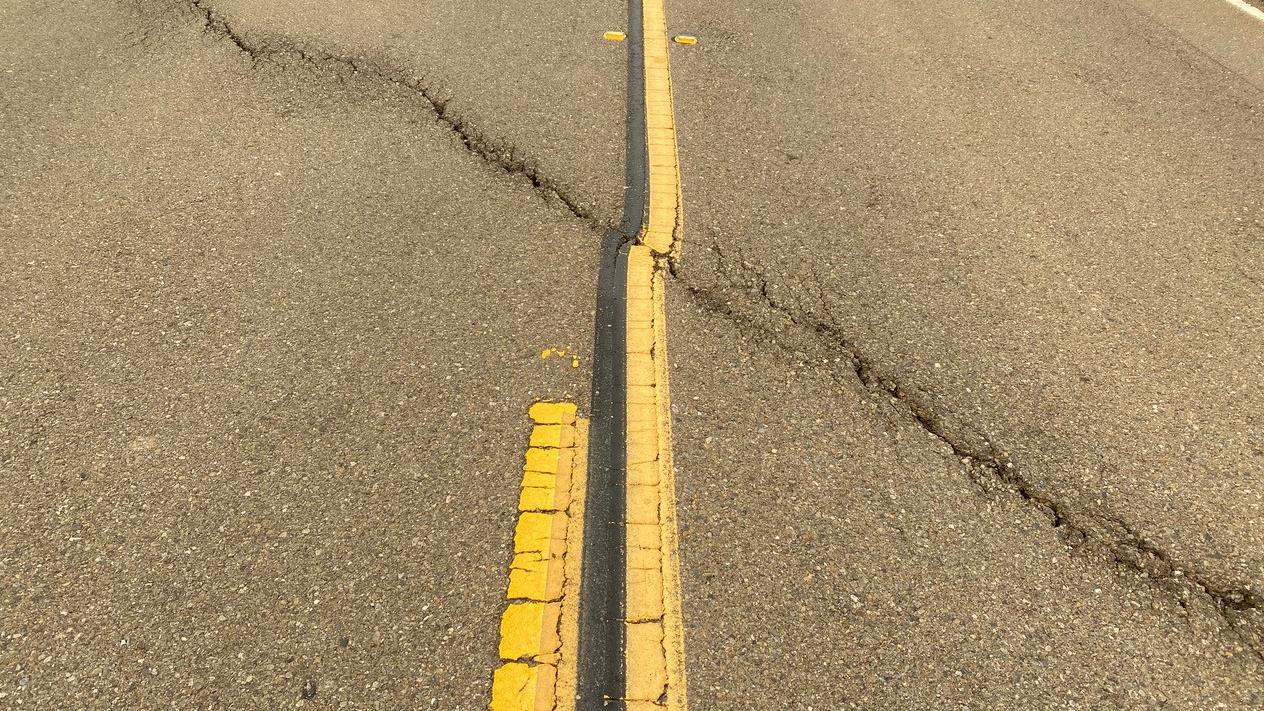
The effects of aseismic slip
Honors and Awards
to
Invalid date -Sponsors
-
Invalid dateP.I.(s)
About CECA
CECA connects and creates a supportive environment for graduate students and postdocs who come from various academic units to do research in CIRES.