Noah Fierer
Professor of Ecology and Evolutionary Biology, Center for Microbial Explora
- Ph.D., University of California, Santa Barbara, 2003
Research Interests
My group works at the interface of the fields of ecology and microbiology. We study those microscopic organisms, namely bacteria and fungi, that are abundant and ubiquitous in nearly every environment on Earth where they are critical to the functioning of ecosystems. Previous work has focused on those microorganisms living inside our homes, in soil, on the human body, and in the atmosphere. We explore the diversity of microbial communities, identify the fundamental controls on microbial processes, and examine the mechanisms by which microorganisms influence human health and the health of ecosystems.
Current Research
Recently, my group has been working with a network of collaborators to examine the adaptations used by microorganisms to survive and grow in 'extreme' environments, defined as those environments where microbial growth is limited due to either challenging environmental conditions and/or a high degree of resource limitation. This work has used both cultivation-independent (e.g. DNA sequencing) and cultivation-based approaches to identify the microbial taxa and the specific adaptations used by microbes to thrive in these environments. For example, we have been investigating the microbes found in deep soils where organic carbon frequently limits growth, and have found that these soils harbor a high degree of novel microbial diversity, including taxa that have unique physiologies that allow them to sustain growth on alternate energy sources. We also have been studying those soil microbes living in the Transantarctic Mountains of Antarctica, one of driest and coldest environments on the planet. While some of the soils in the region harbor diverse microbial communities, other soils appear devoid of any microbial life, establishing the environmental conditions that constrain habitability in terrestrial surface environments. Such 'uninhabited' soils are unlikely to be unique to the study region, challenging expectations about where microbes might, or might not, be able to thrive on Earth and other planets.
Research Categories
Biology and EcosystemsResearch Images
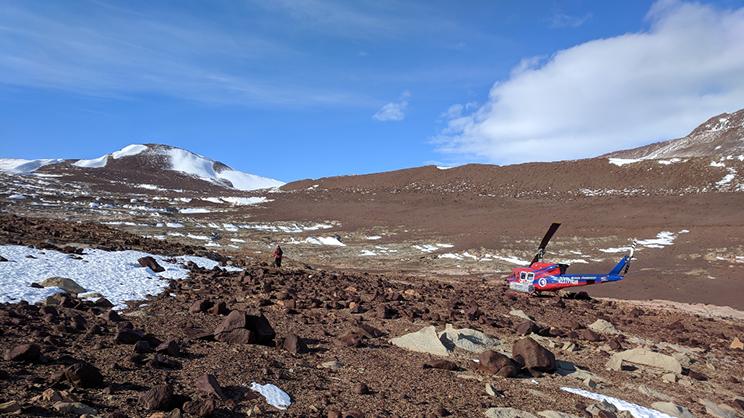
Transantarctic Mountain Range of Antarctica
to
Invalid date -Sponsors
-
Invalid dateP.I.(s)
About CECA
CECA connects and creates a supportive environment for graduate students and postdocs who come from various academic units to do research in CIRES.