John Cassano group
We study the meteorology and climate of both polar regions using regional climate models and numerical weather prediction models
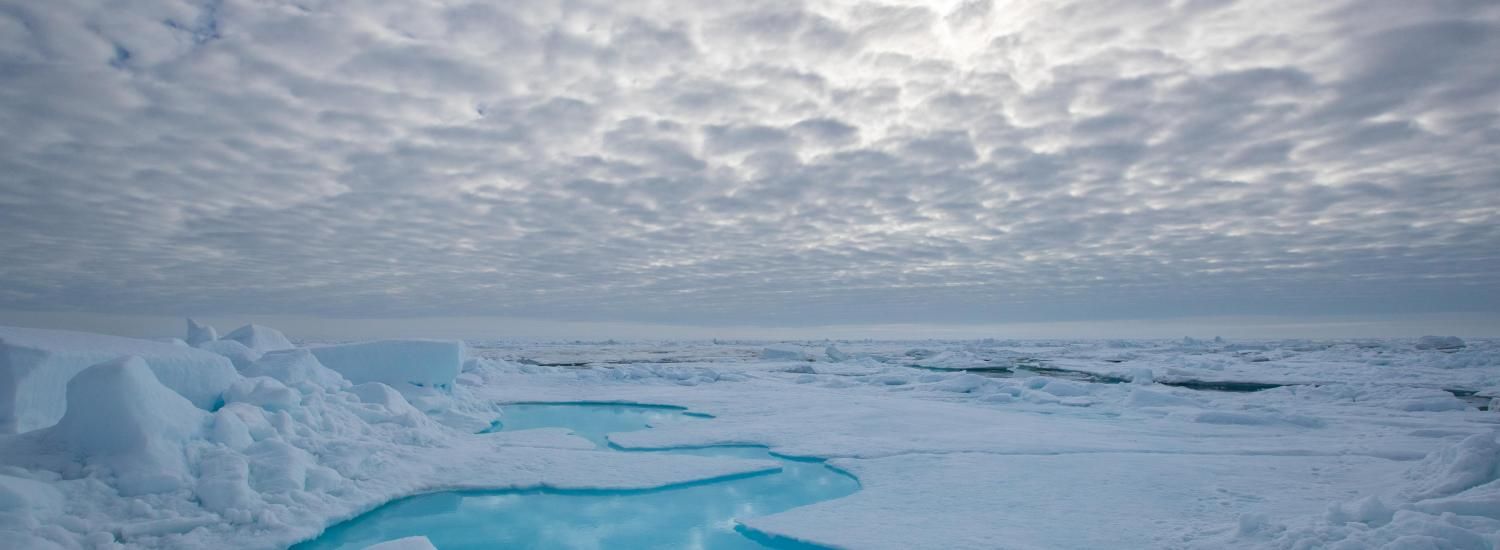
John Cassano group
We study the meteorology and climate of both polar regions using regional climate models and numerical weather prediction models

Location
SEEC Building Room C279
Boulder, CO 80309
Our research group studies the meteorology and climate of both polar regions using regional climate models and numerical weather prediction models, in-situ and remotely sensed observations, and various data analysis techniques. Key research topics include regional climate modeling and model development, analysis of coupled climate system components, and numerical weather prediction.
I am a fellow at the Cooperative Institute for Research in Environmental Sciences and an associate professor in the Department of Atmospheric and Oceanic Sciences. The Polar Climate and Meteorology Group is located on the University of Colorado at Boulder campus.
Referred publications
2018
Akperov, M., A. Rinke, I.I. Mokhov, H. Matthes, V.A. Semenov, M. Adakudlu, J. Cassano, J.H. Christensen, M.A. Dembitskaya, K. Dethloff, X. Fettweis, J. Glisan, O. Gutjahr, G. Heinemann, T. Koenigk, N.V. Koldunov, R. Laprise, R. Mottram, O. Nikiéma, J.F. Scinocca, D. Sein, S. Sobolowski, K. Winger, and W. Zhang, 2018: Cyclone activity in the Arctic from an ensemble of regional climate models (Arctic CORDEX). J. Geophys. Res., 123, https://doi.org/10.1002/2017JD027703.
Brunke, M.A., J.J. Cassano, N. Dawson, A.K. DuVivier, W.J. Gutowski, J. Hamman, W. Maslowski, B. Nijssen, J.E.J. Reeves Eyre, J.C. Renteria, A. Roberts, and X. Zeng, 2018: Evaluation of atmosphere-land-ocean-sea ice interface processes in the Regional Arctic System Model version 1 (RASM1) using local and globally gridded observations, J. Adv. Modeling Earth Systems, in review.
Gilson, G.F., H. Jiskoot, J.J. Cassano, I. Gultepe, and T.D. James, 2018: The thermodynamic structure of Arctic coastal fog occurring during the melt season over East Greenland. Bound.-Layer Meteor., in review.
Hamman, J., B. Nijssen, A. Roberts, and J. Cassano, 2018: On the relationship between Arctic fall season precipitation and minimum sea ice extent. J. Geophys. Res., in preparation.
Koyama, T., J.J. Cassano, E.N. Cassano, and J. Stroeve, 2018: Mid-latitude atmospheric response to autumn Arctic near-surface temperature anomalies in CMIP5 models. in preparation.
2017
Cassano, E.N. and J.J. Cassano, 2017: Atmospheric response to anomalous autumn surface forcing in the Arctic basin. J. Geophys. Res., 122, 9011-9023, doi:10.1002/2017JD026765.
Cassano, J.J., A. DuVivier, A. Roberts, M. Hughes, M. Seefeldt, M. Brunke, A. Craig, B. Fisel, W. Gutowski, J. Hamman, M. Higgins, W. Maslowski, B. Nijssen, R. Osinski, and X. Zeng, 2017: Development of the Regional Arctic System Model (RASM): Near surface atmospheric climate sensitivity. J. Climate, 30, 5729-5753, doi: 10.1175/JCLI-D-15-0775.1.
DuVivier, A.K., J.J. Cassano, S. Greco, and G.D. Emmitt, 2017: A case study of observed and modeled barrier flow in the Denmark Strait in May 2017, Mon. Wea. Rev., 145, 2385-2404, DOI:10.1175/MWR-D-16-0386.1.
Koyama, T., J. Stroeve, J. Cassano, and A. Crawford, 2017: Sea ice loss and Arctic cyclone activity from 1979 to 2014. J. Clim., 30, 4735-4754.
Mateling, M., M. Lazzara, L. Keller, G. Weidner, and J. Cassano, 2017: Alexander Tall Tower! A Study of the Boundary Layer on the Ross Ice Shelf, Antarctica. J. Appl. Meteor. Climatol., 57, 421-434, doi:10.1175/JAMC-D-17-0017.1.
Nigro, M.A., J.J. Cassano, J. Wille, D.H. Bromwich, and M.A. Lazzara, 2017: A self-organizing map-based evaluation of the Antarctic Mesoscale Prediction System using observations from a 30-m instrumented tower on the Ross Ice Shelf, Antarctica. Weather and Forecasting, 32, 223-242, DOI:10.1175/WAF-D-16-0084.1.
Wille, J.D., D.H. Bromwich, J.J. Cassano, M.A. Nigro, M. Mateling, and M.A. Lazzara, 2017: Evaluation of the AMPS boundary layer simulations on the Ross Ice Shelf, Antarctica with unmanned aircraft observations.. J. Appl. Meteor. and Clim.,56,2239-2258, doi:10.1175/JAMC-D-16-0339.1.
2016
Cassano, E.N., J.J. Cassano, M.W. Seefeldt, J. Glisan, W. Gutowski, 2016: Synoptic conditions during summertime temperature extremes in Alaska. Int. J. Clim., 37, 3694-3713, doi:10.1002/joc.4949.
Cassano, J.J., M.A. Nigro, and M.A. Lazzara, 2016: Characteristics of the near-surface atmosphere over the Ross Ice Shelf, Antarctica, J. Geophys. Res., 121, 3339-3362, doi:10.1002/2015JD024383.
Cassano, J.J., E.N. Cassano, M.W. Seefeldt, W.J. Gutowski Jr., and J.M. Glisan, 2016: Synoptic conditions during wintertime temperature extremes in Alaska. J. Geophys. Res, 121, 3421-3262, doi:10.1002/2015JD024404.
Cassano, J.J., M.W. Seefeldt, S. Palo, S.L. Knuth, A. Bradley, P.D. Herrman, P.A. Kernebone, and N.J. Logan, 2016: Observations of the atmosphere and surface state over Terra Nova Bay, Antarctica using unmanned aircraft systems, Earth System Science Data, 8, 115-126, doi:10.5194/essd-115-2016.
Colwell, S.R., A.M. Cayette, M.A. Lazzara, J.G. Powers, D.H. Bromwich, J.J. Cassano, and S. Carpentier, 2016: The 10th Antarctic Meteorological Observation, Modeling, and Forecasting Workshop, Advances in Atmospheric Sciences, 33, 656-658, doi: 10.1007/s00376-016-6012-3.
Costanza, C.A., M.A. Lazzara, L. Keller, and J. Cassano, 2016: The surface climatology of the Ross Ice Shelf, Antarctica. Int. J. Climatology, 36, 4929-4941, doi:10.1002/joc.4681.
DuVivier, A.K., J.J. Cassano, A. Craig, J. Hamman, W. Maslowski, B. Nijssen, R. Osinski, and A. Roberts, 2016: Winter atmospheric buoyancy forcing and oceanic response during strong wind events around southeastern Greenland in the Regional Arctic System Model (RASM) for 1990-2010. J. Climate, 29, 975-994, DOI:10.1175/JCLI-D-15-0592.1.
DuVivier, A.K. and J.J. Cassano, 2016: Comparison of wintertime mesoscale winds over the ocean around southeastern Greenland in WRF and ERA-Interim. Climate Dynamics, 46, 2197-2211, DOI 10.1007/s00382-015-2697-8.
Fraser, A.D., M.A Nigro, S.R.M. Ligtenberg, B. Legresy, M. Inoue, J.J. Cassano, P. Kuipers Munneke, J.T.M. Lenaerts, N.W. Young, A. Treverrow, M. van den Broeke, and H. Enomoto, 2016: Drivers of ASCAT C band backscatter variability in the dry snow zone of Antarctica. J. Glaciology, 62, 170-184, doi:10.1017/jog.2016.29.
Glisan, J.M., W.J. Gutowski Jr, J.J. Cassano, E.N. Cassano, and M.W. Seefeldt, 2016: Analysis of WRF extreme daily precipitation over Alaska using self-organizing maps. J. Geophys. Res., 121, 7746-7761, doi:10.1002/2016JD024822.
Hamman, J., B. Nijseen, M. Brunke, J. Cassano, A. Craig, A. DuVivier, M. Hughes, D.P. Lettenmaier, W. Maslowski, R. Osinski, A. Roberts, X. Zeng, 2016: Land surface climate in the Regional Arctic System Model. J. Climate, 29, 6543-6562, doi:10.1175/JCLI-D-15-0415.1.
Jolly, B., A.J. McDonald, J.H.J. Coggins, P. Zawar-Reza, J. Cassano, M. Lazzara, G. Graeme, G. Plank, O. Petterson, and E. Dale, 2016: A validation of the Antarctic Mesoscale Prediction Systems using self-organizing maps and high-density observations from SNOWWEB. Mon. Wea. Rev., 144, 3181-3200, DOI:10.1175/MWR-D-15-0447.1.
Kennicutt II, M.C., Y.D. Kim, M. Rogan-Finnemore, S. Anandakrishnan, S.L. Chown, S. Colwell, D. Cowan, C. Escutia, Y. Frenot, J. Hall, D. Liggett, A.J. McDonald, U, Nixdorf, M.J. Siegert, J. Storey, A. Wåhlin, A. Weatherwax, G.S. Wilson, T. Wilson, R. Wooding, S. Ackley, N. Biebow, D. Blankenship, S. Bo, J. Baesmann, C.A. Cárdenas, J. Cassano, C. Danhong, J. Dañobeitia, J. Francis, J. Guldahl, G. Hashida, L. Jimenz Corbalan, A. Klepikov, J. Lee, M. Leppe, F. Lifjun, J. López-Martinez, M. Memolli, Y. Motoyoshi, R. Mousalle Bueno, J. Negrete, M.A. Ojeda Cárdenes, M. Proaño Silva, S. Ramos-Garcia, H. Sala, H. Shin, X. Shijie, K. Shiraishi, T. Stockings, S. Trotter, D.G. Vaughan, J. Viera da Unha de Menezes, V. Vlasich, Q. Weijia, J.-G. Winther, H. Miller, S. Rintoul, and H. Yang, 2016: Synthesis: Delivering 21st century Antarctic and Southern Ocean science. Antarctic Science, 28, 407-423, doi:10.1017/S0954102016000481.
McDonald, A.J., J.J. Cassano, B. Jolly, S. Parsons, and A. Schuddeboom, 2016: An automated satellite cloud classification scheme using self-organizing maps: Alternative ISCCP weather states. J. Geophys. Res. 121, 13009-13030, doi:10/1002/2016JD025199.
Mills, C.M., J.J. Cassano, and E.N. Cassano, 2016: Mid-latitude atmospheric responses to Arctic sensible heat flux anomalies in Community Climate Model, version 4. Geophys. Res. Lett., 43, doi:10.1002/2016GL071356.
Weber, N.J., M.A. Lazzara, L.M. Keller, and J.J. Cassano, 2016: The extreme wind events in the Ross Island region of Antarctica. Weather and Forecasting, 31, 985-1000, DOI:10.1175/WAF-D-15-0125.1.
Wille, J.D., D.H. Bromwich, M.A. Nigro, J.J. Cassano, M. Mateling, M.A. Lazzara, and S.-H. Wang, 2016: Evaluation of the AMPS boundary layer simulations on the Ross Ice Shelf with tower observations. J. Appl. Meteor. and Climatology, 55, 2349-2367, doi:10.1175/JAMC-D-16-0032.1.
2015
Cassano, E.N., J. Glisan, J.J. Cassano, W. Gutowski, and M. Seefeldt, 2015: Self-organizing map analysis of widespread temperature extremes in Alaska and Canada. Clim. Res., 62, 199-219, doi:10.3354/cr01274.
DuVivier, A.K. and J.J. Cassano, 2015: Exploration of turbulent heat fluxes and wind stress curl in WRF and ERA-Interim during wintertime mesoscale wind events around southeastern Greenland. J. Geophys. Res., 120, doi:10.1002/2014JD022991.
Hughes, M. and J.J. Cassano, 2015: The climatological distribution of extreme Arctic winds and implications for ocean and sea ice processes. J. Geophys. Res., 120, 7358-7377, doi:10.1002/2015JD023189.
Kennicutt II, M.C., S.L. Chown, J. Cassano, D. Liggett, L.S. Peck, R. Massom, S.R. Rintoul, J. Storey, D.G. Vaughn, T.J. Wilson, I. Allison, J. Ayton, R. Badhe, J. Baeseman, P.J. Barrett, R.E. Bell, N. Bertler, S. Bo, A. Brandt, D. Bromwich, C. Elfring, C. Escutia, J. Francis, H.A. Fricker, M. Fukuchi, N. Gilbert, J. Gutt, C. Havermans, D. Hik, G. Hosie, C. Jones, Y.D. Kim, Y. Le Maho, S.H. Lee, M. Leppe, G. Leitchenkov, X. Li, V. Lipenkov, K. Lochte, J. López-Martínez, C. Lüdecke, W. Lyons, S. Marenssi, H. Miller, P. Morozova, T. Naish, S. Nayak, R. Ravindra, J. Retmales, C.A. Ricci, M. Rogan-Finnemore, Y. Ropert-Coudert, A.A. Samah, L. Sanson, T. Scambos, I. Schloss, K. Shiraishi, M.J. Siegert, J. Simões, M.D. Sparrow, B. Storey, D.H. Wall, J.C. Walsh, G. Wilson, J.G. Winther, J.C. Xavier, H. Yang, and W.J. Sutherland, 2015: A roadmap for Antarctic and Southern Ocean science for the next two decades and beyond. Antarctic Sci., 27, 3-18, doi:10.1017/S0954102014000674
Lazzara, M.A., L.J. Welhouse, D.E. Mikolajczyk, M. Tsukernik, J.E. Thom, L.M. Keller, G.A. Weidner, J. Snarski, J.J. Cassano, and L. Kalnajs, 2015: Automatic weather station (AWS program operated by the University of Wisconsin - Madison during the 2012-2013 field season: Challenges and successes, Antarctic Record, 59, 73-86.
Roberts, A., A. Craig, W. Maslowski, R. Osinski, A. DuVivier, M. Hughes, B. Nijssen, J. Cassano, and M. Brunke, 2015: Simulating transient ice-ocean Ekman transport in the Regional Arctic System Model and Community Earth System Model. Ann. Glaciol., 56, 211-228, doi:10.3189/2015AoG69A760.
2014
Cassano, E.N., J.J. Cassano, M.E. Higgins, and M.C. Serreze, 2014: Atmospheric impacts of an Arctic sea ice minimum as seen in the Community Atmosphere Model. Int. J. Clim., 34, 766-779, DOI: 10.1002/joc.3723.
Cassano, J.J., 2014: Weather bike: A bicycle based weather station for observing local temperature variations. Bull. Amer. Meteor. Soc., 95, 205-209, doi:10.1175/BAMS-D-13-00044.1
Cassano, J.J., 2014: Observations of atmospheric boundary layer temperature profiles with a small unmanned aerial vehicle. Antarctic Science,, 26, 205-213, doi:10/1017/S0954102013000539.
Kennicutt II, M., S.L. Chown, J. Cassano, D. Liggett, R. Massom, L. Peck, S. Rintoul, J. Storey, D. Vaughn, T. Wilson, and W.J. Sutherland, 2014: Antarctic and Southern Ocean science in the 21st century. Nature, 512, 23-25.
Knuth, S.L. and J.J. Cassano, 2014: Estimating sensible and latent heat fluxes using the integral method from in situ aircraft measurements. J. Atmos. Ocean. Tech., 31, 1964-1981, doi:10.1175/JTECH-D-14-00008.1.
Nigro, M. A., and J. J. Cassano, 2014: Identification of Surface Wind Patterns over the Ross Ice Shelf, Antarctica Using Self Organizing Maps. Mon. Wea. Rev., 142, 2361-2378, doi: 10.1175/MWR-D-13-00382.1..
Nigro, M. A., and J. J. Cassano, 2014: Analysis of the Ross Ice Shelf Airstream Forcing Mechanisms Using Self Organizing Maps. Mon. Wea. Rev., 142, 4719-4734, doi:10.1175/MWR-D-14-00077-1.
2013
DuVivier, A. K., and J. J. Cassano, 2013: Evaluation of WRF Model Resolution on Simulated Mesoscale Winds and Surface Fluxes near Greenland. Mon. Wea. Rev., 141, 941–963, doi:10.1175/MWR-D-12-00091.1.
Glisan, J.M., W.J. Gutowski, J.J. Cassano, and M.E. Higgins, 2013: Effects of spectral nudging in WRF on Arctic temperature and precipitation simulations. J. Clim., 26, 3985-3999. DOI: 10.1175/JCLI-D-12-00318.1.
Knuth, S.L., Cassano, J.J., Maslanik, J.A., Herrmann, P.D., Kernebone, P.A., Crocker, R.I., and Logan, N.J., 2013: Unmanned aircraft system measurements of the atmospheric boundary layer over Terra Nova Bay, Antarctica, Earth Syst. Sci. Data, 5, 57-69, doi:10.5194/essd-5-57-2013.
Lazzara, M.A., L.J. Welhouse, J.E. Thom, J.J. Cassano, A.K. DuVivier, G.A. Weidner, L.M. Keller, and L. Kalnajs, 2013: Automatic weather station (AWS) program 2011-2012 field season report. Antarctic Record, 57, 125-135.
Moore, G.W.K., I.A. Renfrew, and J.J. Cassano, 2013: Greenland plateau jets. Tellus, 65, 17468, DOI:10.3402/tellusa.v65i0.17468.
Nolan, M., E. Cassano, and J. Cassano, 2013: Synoptic climatology and recent climate trends at Lake El'gygytgyn. Clim. Past. Discussions, 9, 1271-1286. doi: 10.5194/cp-9-1271-2013.
2012
Brigham-Grette, J., R.A. Bindschadler, M.R. Albert, J.J. Cassano, L.D. Hinzman, E.E. Hofmann, I.I. Krupnik, V. Kingeekuk Metcalf, S. Pfirman, C. Rapley, L. Speer, T.N. Taylor, W.F. Weeks, M. McConnell, E. Dunlea, L. Brown, and S. Freeland, 2012: Lessons and Legacies of the International Polar Year 2007-2008, The National Academies Press, 184pp.
Higgins, M. E. and J. J. Cassano, 2012: Northern Alaskan Land Surface Response to Reduced Arctic Sea Ice Extent, Climate Dynamics, 38, 2099-2113, doi: 10.1007/s00382-011-1095-0.
Lazzara, M.A., G.A. Weidner, L.M. Keller, J.E. Thom, and J.J. Cassano, 2012: Antarctic automatic weather station program: 30 years of polar observations. Bull. Amer. Meteor. Soc., 93, 1519-1537. doi:10.1175/BAMS-D-11-00015.1
Nigro, M.A., J.J. Cassano, and S.L. Knuth, 2012: Evaluation of Antarctic Mesoscale Prediction System (AMPS) cyclone forecasts using infrared satellite imagery. Antarctic Science, 24, 183-192, doi:10.1017/S0954102011000745.
Nigro, M.A., J.J. Cassano, M.A. Lazzara and L.M. Keller, 2012: Case Study of a Barrier Wind Corner Jet Off the Coast of the Prince Olav Mountains, Antarctica. Mon. Wea. Rev., 140, 2044–2063.
Porter, D. F., J. J. Cassano, and M. C. Serreze, 2012: Local and large-scale atmospheric responses to reduced Arctic sea ice and ocean warming in the WRF model, J. Geophys. Res., 117, D11115, doi:10.1029/2011JD016969.
Powers, J.G., Manning, K.W., D.H Bromwich, J.J. Cassano, and A.M. Cayette, 2012: A decade of Antarctic science support through AMPS. Bull. Amer. Meteor. Soc., 93, 1699-1712. doi:10.1175/BAMS-D-11-00186.1
Seefeldt, M.W., and J.J. Cassano, 2012: A description of the Ross Ice Shelf air stream (RAS) through the use of self-organizing maps (SOMs). J. Geophys. Res., 117, D9, doi:10.1029/2011JD016857.
2011
Bailey, A., T. Chase, J.J. Cassano, and D. Noone, 2011: Changing temperature inversion characteristics in the U.S. Southwest and relationships to large-scale atmospheric circulation. J. Appl. Met. and Clim., 50, 1307-1323, doi: 10.1175/2011JAMC2584.1.
Cassano, E.N., J.J. Cassano, and M. Nolan, 2011: Synoptic weather pattern controls on temperature in Alaska. J. Geophys. Res., 116, D11108, doi:10.1029/2010JD015341.
Cassano, J. J., M. E. Higgins, and M. W. Seefeldt, 2011: Performance of the Weather Research and Forecasting (WRF) Model for Month-long pan-Arctic Simulations.Mon. Wea. Rev., 139, 3469-3488, doi: 10.1175/MWR-D-10-05065.1.
Fisel, B.J., W.J. Gutowski, J.M. Hobbos, and J.J. Cassano, 2011: Multi-regime states of the Arctic atmospheric circulation. J. Geophys. Res., 116, D20122, doi:10.1029/2011JD015790.
Knuth, S.L. and J.J. Cassano, 2011: An analysis of near-surface winds, air temperature, and cyclone activity in Terra Nova Bay Antarctica from 1993-2009. J. Appl. Meteor. Climatol. 50, 662-680.
Nigro, M.A., J.J. Cassano, and M.W. Seefeldt, 2011: A weather pattern based approach to evaluate the Antarctic Mesoscale Prediction System (AMPS) forecasts: comparison to automatic weather station observations. Wea. Forecasting., 26, 184-198, doi: 10.1175/2010WAF2222444.1.
Porter, D.F., J.J. Cassano, and M.C. Serreze, 2011: Analysis of the Arctic heat budget in WRF: A comparison with reanalyses and satellite observations. J. Geophys. Res.,116, D22108, doi:10.1029/2011JD016622.
Serreze, M.C., A.P. Barrett, and J.J. Cassano, 2011: Circulation and surface controls on the lower tropospheric air temperature field of the Arctic. J. Geophys. Res., 116, D07104, doi:10.1029/2010JD015127.
Walsh, J.J., D.A. Dieterle, F.R. Chen, J.M. Lenes, W. Maslowski, J.J. Cassano, T.E. Whitledge, D. Stockwell, M. Flint, I.N. Sukhanova, and J. Christensen, 2011: Trophic cascades and future harmful algal blooms within ice-free Arctic seas north of Bering Strait: A simulation analysis. Progress in Oceanography, 91, 313-343, doi: 10.1016/j.pocean.2011.02.001.
2010
Cassano, E.N., and J.J. Cassano, 2010: Synoptic forcing of precipitation in the Mackenzie and Yukon River basins. Int. J. Clim., 30, 658-674.
Cassano, J.J., J.A. Maslanik, C.J. Zappa, A.L. Gordon, R.I. Cullather, and S.L. Knuth, 2010: Wintertime observations of an Antarctic polynya with unmanned aerial systems. EOS, 91, 245-246.
Higgins, M.E. and J.J. Cassano, 2010: Response of Arctic 1000 hPa circulation to changes in horizontal resolution and sea ice forcing in the Community Atmospheric Model using self-organizing maps. J. Geophys. Res., 115, D17114, doi: 10.1029/2009JD013440.
Porter, D., J.J. Cassano, M.C. Serreze, and D.N. Kindig, 2010: New estimates of the large-scale Arctic energy budget. J. Geophys. Res., 115, D08108, doi:10.1029/2009JD012653.
Schuenemann, K. and J.J. Cassano, 2010: Changes in synoptic weather patterns and Greenland precipitation in the 20th and 21st centuries. Part 2: Analysis of 21st century atmospheric changes using self-organizing maps. J. Geophys. Res., 115, D05108, doi:10.1029/2009JD011706.
2009
Finnis, J., J.J. Cassano, M.M. Holland, and M.C. Serreze, 2009: Synoptically forced hydroclimatology of major Arctic watersheds in general circulation models, Part 1: the Mackenzie River basin. Int. J. Climatology, 29, 1226-1243.
Finnis, J., J.J. Cassano, M.M. Holland, M.C. Serreze, and P. Uotila 2009: Synoptically forced hydroclimatology of major Arctic watersheds in general circulation models, Part 2: Eurasian watersheds. Int. J. Climatology, 29, 1244-1261.
Francis, J., Cassano, J.J., Gutowski, W.J., Hinzman, L.D., Holland, M.M., Steele, M.A., White, D.M. and Vorosmaty, C.J., 2009: An Arctic hydrologic system in transition: Feedbacks and impacts on terrestrial, marine, and human life. J. Geophys. Res., 114, G04019, doi:10.1029/2008JG000902.
Higgins, M.E. and J.J. Cassano, 2009: Impacts of reduced sea ice on winter Arctic atmospheric circulation, precipitation, and temperature. J. Geophys. Res., 114, D16107, doi:10.1029/2009JD011884.
Schuenemann, K., J.J. Cassano, and J. Finnis, 2009: Forcing of precipitation over Greenland: Synoptic climatology for 1961 to 1999. J. Hydrometeorology, 10, 60-78.
Schuenemann, K., and J.J. Cassano, 2009: Changes in synoptic weather patterns and Greenland precipitation in the 20th and 21st centuries. Part 1: Evaluation of late 20th century simulations from IPCC models. J. Geophys. Res., 114, D20113, doi:10.1029/2009JD011705.
Skific, N., J.A. Francis, and J.J. Cassano, 2009: Attribution of seasonal and regional changes in Arctic moisture convergence. J. Clim., 22, 5115-5134.
Skific, N., J.A. Francis, and J.J. Cassano, 2009: Attribution of projected changes in atmospheric moisture transport in the Arctic: A self-organizing map perspective. J. Clim., 22, 4135-4153.
Uotila, P., A.B. Pezza, A.H. Lynch, K. Keay, and J.J. Cassano, 2009: A comparison of low pressure system statistics derived from a high resolution NWP output and three re-analysis products over the Southern Ocean. J. Geophys. Res., 114, D17105, doi:10.1029/2008JD011583.
2008
Seefeldt, M.W. and J.J. Cassano, 2008: An analysis of low-level jets in the greater Ross Ice Shelf region based on numerical simulations. Mon. Wea. Rev., 136, 4188-4205.
Zhang, K., J.S. Kimball, E.H. Hogg, M. Zhao, W.C. Oechel, J.J. Cassano, and S.W. Running, 2008: Satellite-based model detection of recent climate driven changes in northern high latitude vegetation productivity. J. Geophys. Res., 113, G03033, DOI 10.1029/2007JG000621.
2007
Cassano, J.J., P. Uotila, A.H. Lynch, and E.N. Cassano, 2007: Predicted Changes in Synoptic Forcing of Net Precipitation in Large Arctic River Basins During the 21 st Century. J. Geophys. Res-Biogeosciences, 112, G04S49, doi:10.1029/2006JG000332.
Finnis, J., M.M. Holland, M.C. Serreze, and J.J. Cassano, 2007: Response of Northern hemisphere extratropical cyclone activity and associated precipitation to climate change, as represented by CCSM3, J. Geophys. Res., 112, G04S42, doi:10.1029/2006JG000286.
Seefeldt, M.W., J.J. Cassano, and T.R. Parish, 2007: Dominant Regimes of the Ross Ice Shelf Surface Wind Field during Austral Autumn 2005. J. Appl. Meteor., 46, 1933-1955.
Uotila, P, A.H. Lynch, J.J. Cassano, and R.I. Cullather, 2007: Changes in Antarctic net precipitation in the 21st century based on IPCC model scenarios. J. Geophys. Res.,112, D10107, doi:10.1029/2006JD007482.
White, D., J. Hinzman, L. Alessa, J. Cassano, M. Chambers, K. Falkner, J. Francis, W. Gutowski, M. Holland, M. Holmes, H. Huntington, D. Kane, A. Kliskey, C. Lee, J. McClelland, B. Peterson, S. Rupp, F. Straneo, M. Steele, R. Woodgate, D. Yang, K. Yoshikawa, and T. Zhang, 2007: The Arctic freshwater system: Changes and impacts.J. Geophys. Res., 112, G04S54, doi:10.1029/2006JG000353.
Wyser, K., C.G. Jones, P. Du., E. Girard, U. Willén, J. Cassano, J.H. Christensen, J.A. Curry, K. Dethloff, J.-E. Haugen, D. Jacob, M. Koltzow, R. Laprise, A. Lynch, S. Pfeifer, A. Rinke, M. Serreze, M.J. Shaw, M. Tjernström, and M. Zagar, 2007: An evaluation of Arctic cloud and radiation processes during the SHEBA year: Simulation results from 8 Arctic regional climate models. Climate Dynamics. doi:10.1007/S00382-007-0286-1.
Zhang, K., J.S. Kimball, M. Zhao, W.C. Oechel, J. Cassano, and S.W. Running, 2007: Sensitivity of pan-Arctic terrestrial net primary productivity simulations to daily surface meteorology from NCEP/NCAR and ERA-40 reanalyses. J. Geophys. Res., 112, G01001, doi:10.1029/2006JG000249.
Zhang, K. J.S. Kimball, K.C. McDonald, J.J. Cassano, and S.W. Running, 2007: Impacts of large-scale oscillations on pan-Arctic terrestrial net primary production.Geophys. Res. Lett., L21403, doi10.1029/2007GL031605.
2006
Cassano, E.N., A.H. Lynch, J.J. Cassano, and M.R. Koslow, 2006: Classification of synoptic patterns in the western Arctic associated with extreme events at Barrow, Alaska, USA. Clim. Res., 30, 83-97.
Cassano, J.J., P. Uotila, and A.H. Lynch, 2006: Changes in synoptic weather patterns in the polar regions in the 20th and 21st centuries. Part 1. Arctic. Int. J. Climatol.,26, 1027-1049 . DOI: 10.1002/joc.1306.
Lynch, A.H., P. Uotila, and J.J. Cassano, 2006: Changes in synoptic weather patterns in the polar regions in the 20th and 21st centuries. Part 2. Antarctic. Int. J. Climatol., 26, 1181-1199. DOI: 10.1002/joc.1305.
Parish, T.R., J.J. Cassano, and M.W. Seefeldt, 2006: Characteristics of the Ross Ice Shelf air stream. J. Geophys. Res., 111, D12109, doi:10.1029/2005JD006185.
Rinke, A., K. Dethloff, J.J. Cassano, J.H. Christensen, J.A. Curry, P. Du, E. Girard, J.E. Haugen, D. Jacob, C.G. Jones, M. Koltzow, R. Laprise, A.H. Lynch, S. Pfeifer, M.C. Serreze, M.J. Shaw, M. Tjernstrom, K. Wyser, and M. Zagar, 2006: Evaluation of an ensemble of Arctic regional climate models: spatiotemporal fields during the SHEBA year. Climate Dynamics, 26, 459-472.
2005
Tjernstrom, M., M. Zagar, G. Svensson, J.J. Cassano, S. Pfeifer, A. Rinke, K. Wyser, K. Dethloff, C. Jones, T. Semmler, and M. Shaw, 2005: Modelling the arctic boundary layer: An evaluation of six arcmip regional-scale models using data from the Sheba project. Boundary-Layer Meteorology, 117, 337-381.
2004
Pavolonis, M.J., J.R. Key, and J.J. Cassano, 2004: A study of the Antarctic surface energy budget using a polar regional atmospheric model forced with satellite-derived cloud properties. Mon. Wea. Rev., 132, 654-661.
2003
Bromwich, D.H., A.J. Monaghan, J.G. Powers, J.J. Cassano, H.L. Wei, Y.-H. Kuo, and A. Pellegrini, 2003: Antarctic mesoscale prediction system (AMPS): A case study from the 2000-01 field season. Mon. Wea. Rev., 131, 412-434.
Guo, Z., D.H. Bromwich, and J.J. Cassano, 2003: Evaluation of Polar MM5 simulations of Antarctic atmospheric circulation. Mon. Wea. Rev., 131, 384-411.
Lynch, A.H., E.N. Cassano, J.J. Cassano, and L. Lestak, 2003: Cases studies of high wind events in Barrow, Alaska: Climatological context and development processes.Mon. Wea. Rev., 131, 719-732.
Parish, T.R., and J.J. Cassano, 2003: Diagnosis of the katabatic wind influence on the wintertime Antarctic surface wind field from numerical simulations. Mon. Wea. Rev., 131, 1128-1139.
Parish, T.R., and J.J. Cassano, 2003: The role of katabatic winds on the Antarctic surface wind regime. Mon. Wea. Rev., 131, 317-333.
2001
Bromwich, D.H., and J.J. Cassano, 2001: Antarctic weather forecasting workshop. Bull. Amer. Meteor. Soc., 82, 1409-1413.
Bromwich, D.H., J.J. Cassano, T. Klein, G. Heinemann, K.M. Hines, K. Steffen, and J.E. Box, 2001: Mesoscale modeling of katabatic winds over Greenland with the Polar MM5. Mon. Wea. Rev., 129, 2290-2309.
Cassano, J.J., T.R. Parish, and J.C. King, 2001: Evaluation of turbulent surface flux parameterizations for the stable surface layer over Halley, Antarctica. Mon. Wea. Rev.,129, 26-46.
Cassano, J.J., J.E. Box, D.H. Bromwich, L. Li, and K. Steffen, 2001: Evaluation of Polar MM5 simulations of Greenland's atmospheric circulation. J. Geophys. Res., 106,33867-33890.
Klein, T., G. Heinemann, D.H. Bromwich, J.J. Cassano, and K.M. Hines, 2001: Mesoscale modeling of katabatic winds over Greenland and comparisons with AWS and aircraft data. Met. Atmos. Phys., 78, 115-132.
Parish, T.R., and J.J. Cassano, 2001: Forcing of the wintertime Antarctic boundary-layer winds from the NCEP/NCAR global reanalysis. J. Appl. Meteor., 40, 810-821.
2000
Cassano, J.J., and T.R. Parish, 2000: An analysis of the nonhydrostatic dynamics in numerically simulated Antarctic katabatic flows. J. Atmos. Sci., 57, 891-898.
Technical reports
Bromwich, D.H., and J.J. Cassano, Eds., 2000: Recommendations to the National Science Foundation from the Antarctic Weather Forecasting Workshop. BPRC Miscellaneous Series Report M-420, 48pp.
Bromwich, D.H. and J.J. Cassano, 2000: RIME: A field program for advancing Antarctic weather prediction. Recommendations to the National Science Foundation from the Antarctic Weather Forecasting Workshop, D.H. Bromwich and J.J. Cassano, Eds., Byrd Polar Research Center, 37-40.
Cassano, J.J., J. Wegiel, D. Bacon, B. Kuo, B. Muller, A. Cayette, S. Pendlebury, and P.F. Coppola, 2000: Numerical forecast models. Recommendations to the National Science Foundation from the Antarctic Weather Forecasting Workshop, D.H. Bromwich and J.J. Cassano, Eds., Byrd Polar Research Center, 25-32.
Books
Shaw, M., and J.J. Cassano, 2006: Applied Atmospheric Dynamics: Review Question Solutions. J. Wiley and Sons, West Sussex, available as electronic document from publisher.
Cassano, J.J., and R.B. Stull, 1995: An Instructors Supplement to Meteorology Today for Scientists and Engineers . West Publishing Co., 139pp.
Lab manuals
Cassano, J.J. (ed); 1998: ATSC 2000 Introduction to Meteorology Lab Manual, University of Wyoming
ATOC 1050: Weather and the Atmosphere: Severe and Hazardous Weather
This course is designed to provide students with the knowledge to understand the processes responsible for creating the weather that they experience on a daily basis.
ATOC 3050: Principles of Weather
This course explores the processes that influence middle latitude weather including atmospheric thermodynamics, cloud and precipitation processes, atmospheric dynamics, air masses and fronts, mid-latitude cyclones, and thunderstorms.
ATOC 4720: Introduction to Atmospheric Physics and Dynamics-Undergraduate
This course explores the physical processes occurring in the atmosphere, with an emphasis on those processes that give rise to atmospheric circulations across a range of spatial and temporal scales.
ATOC 4750/5750: Desert Meteorology
In this course we will discuss the unique characteristics of desert weather and climate.
ATOC 5050: Introduction to Atmospheric Physics and Dynamics-Graduate
This course provides a quantitative view of atmospheric thermodynamics and dynamics, supplemented with frequent real-world examples of the phenomena of interest.
ATOC 6700: Weather Forecasting Discussion
This seminar is designed to stimulate discussion of current weather events and allow ATOC faculty, students, and other interested parties to share their knowledge of local weather and weather forecasting.
Atmospheric dynamics textbook
Applied Atmospheric Dynamics by Amanda H. Lynch and John J. Cassano
Also available via Amazon.com