Margaret Tolbert group
Our research contributes to a better understanding of the Earth's complex atmosphere

Margaret Tolbert group
Our research contributes to a better understanding of the Earth's complex atmosphere

We are a research group in the department of Chemistry and CIRES at the University of Colorado at Boulder. Our research contributes to a better understanding of Earth and planetary atmospheres. Specifically, work in our group specializes in understanding atmospheric heterogeneous chemistry. For example, the importance of heterogeneous chemistry in catalyzing stratospheric ozone loss has been firmly established. In the case of the ozone hole, reactions on polar stratospheric clouds (PSCs) are responsible for repartitioning chlorine reservoir species into photochemically active species capable of catalytically destroying ozone. However, significant questions still remain as to the composition, phase, nucleation mechanisms, and surface chemistry of PSCs. Traditionally, work in our group has been aimed at answering these questions.
Today, the research in our group has expanded in an attempt to answer similar questions about cirrus clouds and other particulate matter that exist in the troposphere. Currently, our research explores the chemistry of tropospheric aerosols, and the impact of such aerosols on climate and visibility. Finally, we are also probing aerosols in the atmospheres of other planetary bodies such as Mars and Saturn’s moon Titan, and studying the possible role of aerosols on early Earth as life was developing. Research in our group is funded primarily through NASA and NSF.
My interests are in the area of heterogeneous atmospheric chemistry, focusing on the chemical, physical, and optical properties of atmospheric aerosols. In addition to fundamental studies of particles, we are also exploring how atmospheric aerosols impact current problems such as stratospheric ozone depletion, global climate change, urban smog, and visibility degradation.
Research in the Tolbert group is not limited to studies of atmospheric aerosols on the current-day Earth. We are also probing the particles that might have been present at the earliest times in Earth’s history. We are interested in how these particles might have impacted the climate of early Earth and the development of life on Earth. As a parallel to early Earth, we are also studying aerosols and clouds on other planetary bodies such as Mars and Saturn’s moon Titan.
Our work is primarily laboratory based, but involves collaborations with theory teams and those involved in fieldwork. Our primary support comes from the National Science Foundation and NASA.
Recent Publications
Metal Oxide Particles as Atmospheric Nuclei: Exploring the Role of Metal Speciation in Heterogeneous Efflorescence and Ice Nucleation. Z. R. Schiffman, M. S. Fernanders, R. D. Davis, M. A. Tolbert. 2023 7 (4), 812-822 https://doi.org/10.1021/acsearthspacechem.2c00370
Laboratory Studies of Brine Growth Kinetics Relevant to Deliquescence on Mars.
R. V. Gough, D. L. Nuding, G. M. Martínez, E. G. Rivera-Valentín, K. M. Primm, M. A. Tolbert. Planet. Sci. J. 4:46 2023 https://doi.org/10.3847/PSJ/acbd98
Deducing the Composition of Venus Cloud Particles with the Autofluorescence Nephelometer (AFN). Baumgardner D, Fisher T, Newton R, Roden C, Zmarzly P, Seager S, Petkowski JJ, Carr CE, Špaček J, Benner SA, Tolbert MA, Jansen K, Grinspoon DH, Mandy C. Aerospace. 2022; 9(9):492. https://doi.org/10.3390/aerospace9090492
Trace H2S promotes organic aerosol production and organosulfur compound formation in Archean analog haze photochemistry experiments. Reed, N. W., Wing, B. A., Tolbert, M. A., Browne, E. C. Geophys. Rev. Lett., 49, e2021GL097032, 2022. https://doi.org/10.1029/2021GL097032
Water uptake by chlorate salts under Mars-relevant conditions. M.S. Fernanders, R.V. Gough, V.F. Chevrier, Z.R. Schiffman, S.B. Ushijima, G.M. Martinez, E.G. Rivera-Valentín, P.D. Archer, J.V. Clark, B. Sutter, M.A. Tolbert. Icarus, 371, 114715, 2022. https://doi.org/10.1016/j.icarus.2021.114715.
Seeded Crystal Growth of Internally Mixed Organic–Inorganic Aerosols: Impact of Organic Phase State. S. B. Ushijima, E. Huynh, R. D. Davis, M. A. Tolbert. J. Phys. Chem. A, 125, 39, 8668–8679, 2021. https://doi.org/10.1021/acs.jpca.1c04471
Probing Heterogeneous Efflorescence of Mars-Relevant Salts with an Optical Levitator
Ushijima, SB; Gough, RV and Tolbert, MA. ACS EARTH AND SPACE CHEMISTRY. 4 (11) , pp.1947-1956, 2020.
https:doi.org/10.1021/acsearthspacechem.0c00161http://doi.org/10.1021/acsearthspacechem.0c00161
Persisting volcanic ash particles impact stratospheric SO2 lifetime and aerosol optical properties
Zhu, Y., Toon, O.B., Jensen, E.J., Bardeen, C.G., Mills, M.J., Tolbert, M.A., Yu P., Woods, S. Nat Commun 11, 4526 (2020). https://doi.org/10.1038/s41467-020-18352-5 https://doi.org/10.1038/s41467-020-18352-5
Glyoxal's impact on dry ammonium salts: fast and reversible surface aerosol browning. De Haan, DO; Hawkins, LN; Jansen, K; Welsh, HG; Pednekar, R; de Loera, A; Jimenez, NG; Tolbert, MA; Cazaunau, M; Gratien, A; Berge, A; Pangui, E; Formenti, P; Doussin, JF. ATMOSPHERIC CHEMISTRY AND PHYSICS 20, Pages 9581-9590, 2020. https://doi.org/10.5194/acp-20-9581-2020
Impact of Hydrogen Sulfide on Photochemical Haze Formation in Methane/Nitrogen Atmospheres. Reed, NW; Browne, EC; Tolbert, MA. ACS EARTH AND SPACE CHEMISTRY 4, Pages 897-904, 2020. https://doi.org/10.1021/acsearthspacechem.0c00086
Changes in Soil Cohesion Due to Water Vapor Exchange: A Proposed Dry-Flow Trigger Mechanism for Recurring Slope Lineae on Mars. Gough, RV; Nuding, DL; Archer, PD; Fernanders, MS; Guzewich, SD; Tolbert, MA; Toigo, AD. GEOPHYSICAL RESEARCH LETTERS 47, Pages -, 2020. https://doi.org/10.1029/2020GL087618
Brown Carbon Production by Aqueous-Phase Interactions of Glyoxal and SO2. De Haan, DO; Jansen, K; Rynaski, AD; Sueme, WRP; Torkelson, AK; Czer, ET; Kim, AK; Rafla, MA; De Haan, AC; Tolbert, MA. ENVIRONMENTAL SCIENCE & TECHNOLOGY 54, Pages 4781-4789, 2020. https://doi.org/10.1021/acs.est.9b07852
The Impact of Molecular Oxygen on Anion Composition in a Hazy Archean Earth Atmosphere. Ugelow, MS; Berry, JL; Browne, EC; Tolbert, MA. ASTROBIOLOGY 20, Pages 658-669, 2020. https://doi.org/10.1089/ast.2019.2145 (https://doi.org/10.1089/ast.2019.2145)
6. Adsorption isotherms and nucleation of methane and ethane on an analog of Titan's photochemical aerosols. Rannou, P; Curtis, D; Tolbert, MA. ASTRONOMY & ASTROPHYSICS 631, Pages 1-12, 2019. https://doi.org/10.1051/0004-6361/201935777
The Influence of Gas-phase Chemistry on Organic Haze Formation. Berry, JL; Ugelow, MS; Tolbert, MA; Browne, EC. ASTROPHYSICAL JOURNAL LETTERS 885, Pages -, 2019. https://doi.org/10.3847/2041-8213/ab4b5b
Solid-solid hydration and dehydration of Mars-relevant chlorine salts: Implications for Gale Crater and RSL locations. Gough, RV; Primm, KM; Rivera-Valentin, EG; Martinez, GM; Tolbert, MA. ICARUS 321, Pages 1-13, 2019. https://doi.org/10.1016/j.icarus.2018.10.034
Solid-solid hydration and dehydration of Mars-relevant chlorine salts: Implications for Gale Crater and RSL locations. R.V. Gough, K.M. Primm, E.G. Rivera-Valentín, G.M. Martínez, M.A. Tolbert. Icarus Volume 321, 15 March 2019, Pages 1-13 (https://doi.org/10.1016/j.icarus.2018.10.034)
Solid-solid hydration and dehydration of Mars-relevant chlorine salts: Implications for Gale Crater and RSL locations. R.V. Gough, K.M. Primm, E.G. Rivera-Valentín, G.M. Martínez, M.A. Tolbert. Icarus Volume 321, 15 March 2019, Pages 1-13 (https://doi.org/10.1016/j.icarus.2018.10.034)
Compositional and Mineralogical Effects on Ice Nucleation Activity of Volcanic Ash. Kimberly Genareau 1,*, Shelby M. Cloer 1, Katherine Primm 2, Margaret A. Tolbert [OrcID] and Taylor W. Woods. Atmosphere 2018, 9(7), 238; (https://doi.org/10.3390/atmos9070238)
The effect of Mars-relevant soil analogs on the water uptake of magnesium perchlorate and implications for the near-surface of Mars,” K. M. Primm, R. V. Gough, J. Wong, E. G. Rivera‐Valentin, G. M. Martinez, J. V. Hogancamp, P. D. Archer, D. W. Ming, M. A. Tolbert. Journal of Geophys. Res. Planets, doi: 10.1029/2018JE005540, 2018.
Compositional and mineralogical effects on ice nucleation of volcanic ash,” K Genareau, SM Cloer, K Primm, MA Tolbert and TW Woods, Atmosphere, 9(7), 238, doi: 10.3390/atmos9070238, 2018. (Cover article)
Solid-solid hydration and dehydration of Mars-relevant chlorine salts: implications for Gale Crater and RSL locations,” R Gough, K Primm, E Rivera-Valentin, G Martinez and M Tolbert, Icarus, 321,1-13 2018.
Creamean J.M., K.M. Primm, M.A. Tolbert, E.G. Hall, J. Wendell, A. Jordan, P.J. Sheridan, J. Smith, R.C. Schnell (2018), HOVERCAT: A Novel Aerial System for Evaluation of Aerosol-Cloud Interactions, Atm. Meas. Tech., 11, 7, 3969-3985, doi: 10.5194/amt-11-3969-2018
Ugelow M.S., D.O. De Hann, S.M. Horst, and M.A. Tolbert (2018), The Effect of Oxygen on Organic Haze Properties, Astrophys, J. Let., 859, 1, doi: 10.3847/2041-8213/aac2c7
Horst S.M., C. He, M.S. Ugelow, A.M. Jellinek, R.T. Pierrehumbert, M.A. Tolbert (2018), Exploring the Atmosphere of Neoproterozoic Earth: The Effect of O-2 on Haze Formation and Composition, Astrophys. J., 858, 2, doi: 10.3847/1538-4357/aabd7d
Rivera-Valentin E.G., R.V. Gough, V.F. Chevrier, K.M. Primm, G.M. Martinez, and M.A. Tolbert (2018), Constraining the Potential Liquid Water Environment at Gale Crater, Mars, J. Geophys. Res. Planet, 123, 5, 1156-1167, doi: 10.1002/2018JE005558
Ushijima S.B., R.D. Davis, and M.A. Tolbert (2018), Immersion and Contact Efflorescence Induced by Mineral Dust Particles, J. Phys. Chem. A., 122, 5, 1301-1311, doi: 10.1021/acsjpca.7b12075
Horst S. M., Y.H. Yoon, M.S. Ugelow, A.H. Parker, R. Li, J.A. deGouw, and M.A. Tolbert (2018), Laboratory Investigations of Titan Haze Formation: In situ Measurement of Gas and Particle Composition, Icarus, 301, 136-151, doi: 10.1016/j.icarus.2017.09.039
Gough R.V., J. Wong, Dickson J.L., J.S. Levy, J.W. Head, D.R. Marchant, and M.A. Tolbert (2017), Brine Formation via Deliquescence by Salts Found Near Don Juan Pond, Antarctica: Laboratory Experiments and Field Observational Results, Earth and Planetary Sci. Let., 476, 189-198, doi: 10.1016/j.epsl.2017.08.003
Nuding, D.L., R.V. Gough, K.J. Venkateswaran, J.A. Spry, and M.A. Tolbert (2017), Laboratory Investigations on the Survival of Bacillus subtilis Spores in Deliquescent Salt Mars Analog Environments, Astrobiology, 17, 10, 997-1008, doi: 10.1089/ast.2016.1545
Ugelow M.S., K.J. Zarzana, D.A. Day, J.L. Jimenez, and M.A. Tolbert (2017), The Optical and Chemical Properties of Discharge Generated Organic Haze Using In-Situ Real-Time Techniques, Icarus, 294, 1-13, doi: 10.1016/j.icarus.2017.04.028
Primm K.M., R.V. Gough, and M.A. Tolbert (2017), Freezing of perchlorate and chloride brines under Mars-relevant conditions, Geochimica et Cosmochimica Acta., 212, 211-220, doi: 10.1016/j.gca.2017.06.012
Davis R.D. and M.A. Tolbert, Crystal Nucleation Initiated by Transient Ion-Surface Interactions at Aerosol Interfaces, Sci. Adv., 3, 7, doi: 10.1126/sciadv.1700425
Primm K.M., G.P. Schill, D.P. Veghte, M.A. Freedman, and M.A. Tolbert (2017), Depositional Ice Nucleation on NX Illite and Mixtures of NX Illite with Organic Acids, J. Atm. Chem., 74, 1, 55-69, doi: 10.1007/s10874-016-9340-x
Hicks R. K., D.A. Day, J.L. Jimenez, and M.A. Tolbert (2016), Follow the Carbon: Isotopic Labeling Studies of Early Earth Aerosol, Astrobiology, 16, 11, 822-830, doi: 10.1089/ast.2015.1436
Gough R.V., V.F. Chevrier, and M.A. Tolbert (2016), Formation of liquid water at low temperatures via the deliquescence of calcium chloride: Implications for Antarctica and Mars, Planetary and Space Science, 131, 79-87, doi: 10.1016/j.pss.2016.07.006
Hasenkopf C.A., D.P. Veghte, G.P. Schill, S. Lodoysamba, M.A. Freedman, and M.A. Tolbert (2016), Ice nucleation, shape, and composition of aerosol particles in one of the most polluted cities in the world: Ulaanbaatar, Mongolia, Atmos. Env., 139, 222-229, doi: 10.1016/j.atmosenv.2016.05.037
Davis R.D., S. Lance, J.A. Gordon, S.B. Ushijima, and M.A. Tolbert (2015), Contact efflorescence as a pathway for crystallization of atmospherically relevant particles, PNAS, 112, 15815-15820, doi: 10.1073/pnas.1522860113
Davis R.D., S. Lance, J.A. Gordon, and M.A. Tolbert (2015), Long Working-Distance Opticall Trap for in Situ Analysis of Contact-Induced Phase Transformations, Analytical Chemistry, 87, 6186-6194, doi:10.1021/acs.analchem.5b00809.
Hicks R.K., D.A. Day, J.L. Jimenez, and M.A. Tolbert (2015), Elemental Analysis of Complex Organic Aerosol Using Isotopic Labeling and Unit-Resolution Mass Spectrometry, Analytical Chemistry, 87, 2741-2747, doi:10.1021/ac504014g.
Nuding D.L. , R.D. Davis, R.V. Gough, and M.A. Tolbert (2015), The aqueous stability of Mars salt analog: Instant Mars, J. Geophys. Res-Planets, 120, 588-598, doi:10.1002/2014JE004722
Schill G.P., K. Genareau, and M.A. Tolbert (2015), Deposition and immersion-mode nucleation of ice by three distinct samples of volcanic ash, Atmos. Chem. Phys., 15, 7523-7536, doi:10.5194/acp-15-7523-2015
Laboratory investigations of Titan haze formation: In situ measurement of gas and particle composition (link)
By: Horst, Sarah M.; Yoon, Y. Heidi; Ugelow, Melissa S.; et al.
ICARUS Volume: 301 Pages: 136-151 Published: FEB 2018
Brine formation via deliquescence by salts found near Don Juan Pond, Antarctica: Laboratory experiments and field observational results (link)
By: Gough, R. V.; Wong, J.; Dickson, J. L.; et al.
EARTH AND PLANETARY SCIENCE LETTERS Volume: 476 Pages: 189-198 Published: OCT 15 2017
Laboratory Investigations on the Survival of Bacillus subtilis Spores in Deliquescent Salt Mars Analog Environments (link)
By: Nuding, Danielle L.; Gough, Raina V.; Venkateswaran, Kasthuri J.; et al.
ASTROBIOLOGY Volume: 17 Issue: 10 Pages: 997-1008 Published: OCT 2017
The optical and chemical properties of discharge generated organic haze using in-situ real-time techniques (link)
By: Ugelow, Melissa S.; Zarzana, Kyle J.; Day, Douglas A.; et al.
ICARUS Volume: 294 Pages: 1-13 Published: SEP 15 2017
Freezing of perchlorate and chloride brines under Mars-relevant conditions (link)
By: Primm, K. M.; Gough, R. V.; Chevrier, V. F.; et al.
GEOCHIMICA ET COSMOCHIMICA ACTA Volume: 212 Pages: 211-220 Published: SEP 1 2017 (currently listed as "under review")
Crystal nucleation initiated by transient ion-surface interactions at aerosol interfaces (link)
By: Davis, Ryan D.; Tolbert, Margaret A.
SCIENCE ADVANCES Volume: 3 Issue: 7 Article Number: e1700425 Published: JUL 2017
Rayleigh scattering cross-section measurements of nitrogen, argon, oxygen and air (vol 147, pg 171, 2014) (link)
By: Thalman, Ryan; Zarzana, Kyle J.; Tolbert, Margaret A.; et al.
JOURNAL OF QUANTITATIVE SPECTROSCOPY & RADIATIVE TRANSFER Volume: 189 Pages: 281-282 Published: MAR 2017
Follow the Carbon: Isotopic Labeling Studies of Early Earth Aerosol (link)
By: Hicks, Raea K.; Day, Douglas A.; Jimenez, Jose L.; et al.
ASTROBIOLOGY Volume: 16 Issue: 11 Pages: 822-830 Published: NOV 2016
Updated October, 2020
Qualified students interested in becoming a member of the Tolbert group should apply to the University of Colorado Boulder through the Department of Chemistry and Biochemistry. Details can be found on the Department's web site on Graduate Programs.
For more information about the Analytical, Environmental, and Atmospheric Division, please see the division webpage
If you’re already a CU student and interested in our group, feel free to contact anyone in the group for more information about us or to attend our weekly meetings on Tuesday 1 - 3pm in CIRES 340 (Map Room)!
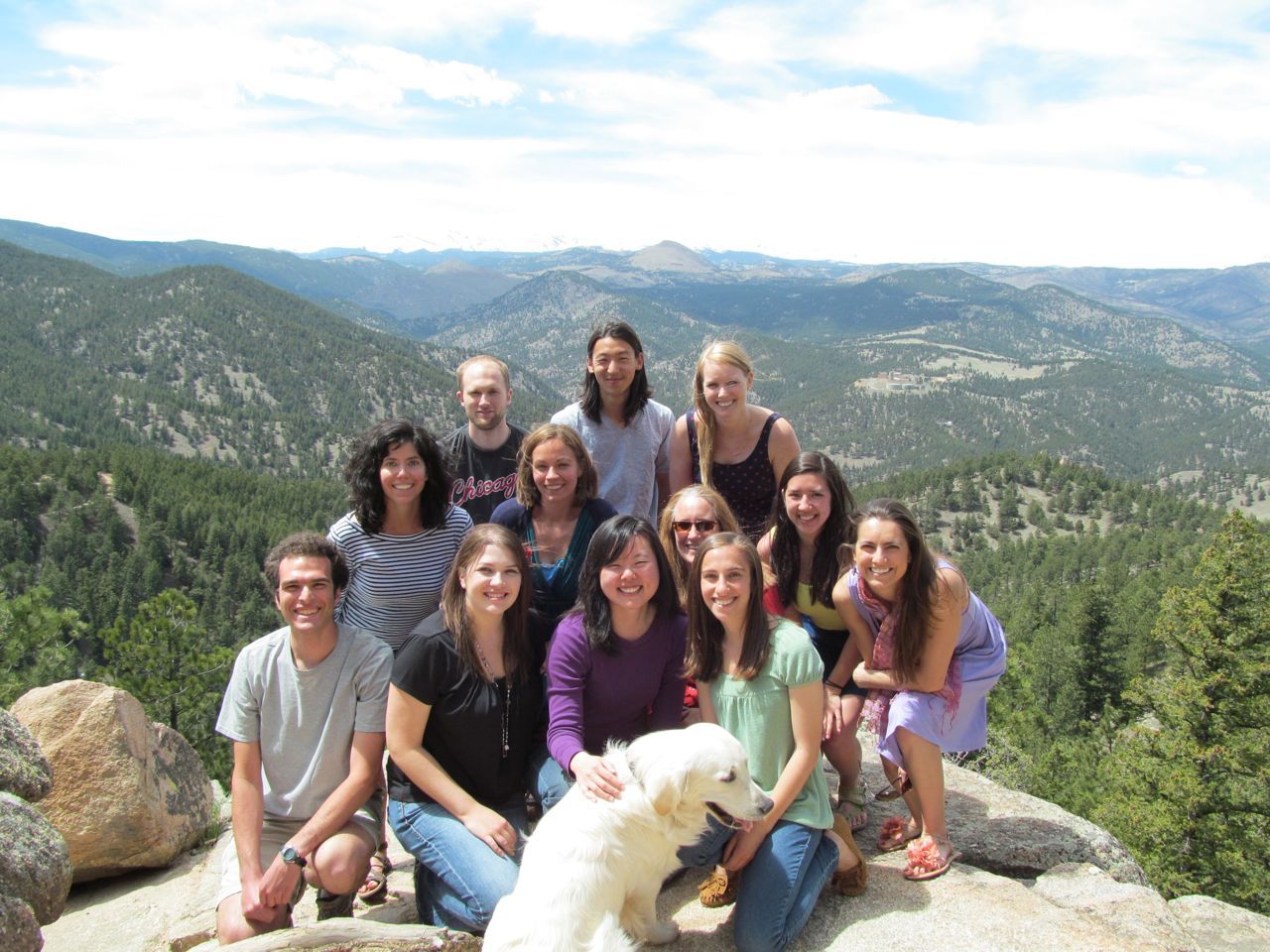



Kyle McMillan
Marium Fernanders
Past Employee
Recent Alumni

Katie Primm
Melissa Ugelow

Shuichi Ushijima
Chemistry Instructor
Ryan Davis
Graduate Student
Raea Hicks
Kevin Jansen
Past Employee
NASA Mars Rover Team - Dr. Raina Gough has been selected to be part of a team of 28 scientists to work on NASA's Curiosity Rover in Mars. Her laboratory studies on deliquescence, the process where a crystalline salt picks up atmoshperic water and turn into a solution, has shown that briney solutions can be stable and possibly exist for certain times on the surface of Mars. If salty solutions exist on Mars, it would mean that liquid water, which is essential to life as we know it, is also present. It is known that water exists on the surface of Mars, but currently only ice and water vapor (in the form of humidity) has been confirmed. Liquid water has yet to be confirmed nor encounted by the Curiosity Rover. Raina's work will provide more insight to the possibility of liquid water on Mars and potentially to life on Mars. For more informatio check out these articles from CIRES and NASA about Raina and the science team for Curiosity.
Recent Graduate - Raea Hicks. A recent graduate of the Tolbert group, Raea's research focused on understanding the conversion of planetary atmospheric gases into aerosols. To do this, she first made aerosol analogs by initiating photochemistry in gas mixtures relevant to the atmospheres of Titan and early Earth, then analyzed the products in situ with a specialized instrument called an aerosol mass spectrometer (AMS). Specifically, she used isotopic labeling to determine the roles played by CH4 and CO2 in contributing carbon to early Earth aerosol analogs, and performed studies to deduce the role of pressure in nitrogen incorporation into Titan aerosol analogs. As each study involved a different non-standard use of the AMS, Raea created new techniques to perform the experiments and analyze the data. Now a post-doc at the Pacific Northwest National Laboratory, Raea leverages her expertise in non-standard AMS applications to address questions related to soil science. In particular, she hopes to discover factors that control the conversion of carbon from soil organic matter to greenhouse gases.
Where are they now? Dr. Danielle Nuding has taken a position as a Systems Engineer at the Jet Propulsion Laboratory in Pasadena, CA. Dr. Nuding will be working on mission development for assigned JPL flight projects, which will include developing systems and mission level architectures. Dr. Gregg Schill was awarded a National Science Foundation Postdoctoral Research Fellowship and will be working with Prof. Paul DeMott at Colorado State University in Fort Collins, CO. Dr. Schill will be continuing ice nucleation studies, but on ambient aerosol from biomass burning and fossil fuel combustion. Dr. Kyle Zarzana will join Dr. Steve Brown's group at the NOAA Earth System Research Laboratories in Boulder, CO. Dr. Zarzana will be using cavity enhanced spectroscopy to study glyoxal and other traces gases.
Margaret Tolbert Named CU Distinguished Professor
The University of Colorado Board of Regents awarded Margaret Tolbert, Ph.D., a Fellow of the Cooperative Institute for Research in Environmental Sciences (CIRES), and two other CU professors the university’s highest faculty honor, designation as Distinguished Professor, Friday, Sept., 17, 2010. Distinguished Professors are CU faculty members who are leaders in their fields and are recognized for their outstanding contributions in teaching, research and distinguished scholarship or creative work. To date, 56 professors across the CU system hold the title.
Sharon Anthony
Associate Professor of Environmental Science
Northland College
Ashland, WI
Stephen Barone
Partner
Lathrop and Gage, LLP
Boulder, CO
Kelly Baustian
Postdoctoral Research Fellow
School of Earth and Environment
University of Leeds
Melinda R. Beaver
National Exposure Research Laboratory
Environmental Protection Agency
Research Triangle Park, NC, USA
Brian Berland
Chief Science Officer
ITN Energy Systems
Littleton, CO
Sarah Brooks
Texas A&M University
College Station, TX
Brandon Connelly
Post Doc
Department of Chemistry
Penn State University
University Park, PA
Daniel Curtis
Assistant Professor, Chemistry
California State University, Northridge
Northridge, CA
Ryan Davis
Post Doctoral Fellow,
Lawrence Berkeley National Laboratory
Berkeley, CA
Lori Del Negro
Associate Professor of Chemistry,
Lake Forest College
Lake Forest, IL
H. Langley DeWitt
Laboratoire Chimie Environnement (LCE)
Equipe Instrumentation et Réactivité Atmosphérique (IRA)Aix Marseille Université Marseille, France
Rob Disselkamp
Global Renewable Energy & Market Analyst
Solis Research
Richland, WA
Tara Fortin
Thermophysical Properties Division
National Institute of Standards and Technology
Boulder, CO, USA
Krishna Foster-Connor
University of California - Irvine
Dept. of Chemistry
Irvine, CA
Miriam A. Freedman
Department of Chemistry
Penn State University
University Park, PA
Elizabeth K. (Frinak) Mentis
United States Military Academy
Rebecca Garland
Senior Researcher
Environmental Health Group
Council for Scientific & Industrial Research
South Africa
David Glandorf
Harvard Law School
Cambridge, MA
Raina Gough
NRC Postdoctoral Research Associate
National Institute for Science and Technology
Thermophysical Properties Division
Boulder, CO
Christa Hasenkopf
American Institute of Physics State Department Science Fellow
U.S. Agency for International Development
Washington, D.C.
Courtney D. Hatch
Assistant Professor
Hendrix College
Conway, AR
Raea Hicks
Post Doctoral Fellow
Pacific Northwest National Laboratory
Richland, WA
Sarah Hörst
Assistant Professor
Johns Hopkins University
Baltimore, MD
Paula Hudson
Assistant Professor, Chemistry
California State University, Fullerton
Fullerton, CA
Laura Iraci
NASA Ames Research Center
MS 245-5
Moffett Field, CA
Birgit Koehler
Regional Coordination Manager
Bonneville Power Administration
Portland, OR
bgkoehler@bpa.gov
Christy Long
Graduate Student
Arizona State University
Tempe, AZ
Ann Middlebrook
Research Chemist
NOAA ESRL Chemical Sciences Laboratory
Boulder, CO
Ben Murray
Reader in Aerosol Science
University of Leeds
Leeds, United Kingdom
Megan Northway
Aerodyne Research, Inc.
Billerica, MA
Danielle Nuding
Systems Engineer
Jet Propulsion Laboratory
Pasadena, CA
Tim Onasch
Aerodyne Research, Inc.
Billerica, MA
tonasch@sigmaxi.org
Tony Prenni
Department of Atmospheric Science
Colorado State University
Fort Collins, CO
tony@aerosol.atmos.colostate.edu
Bhavani Rajaram
Carly Robinson
OSA and SPIE Arthur H. Guenther Congressional Fellow
National Institute for Science and Technology
Washington, D.C.
Marin Robinson
Professor, Chemistry
Northern Arizona University
Flagstaff, AZ
Gregory Schill
Post-doctoral Research Fellow
Colorado State University
Fort Collins, CO
John E. Shilling
Atmospheric Chemistry & Meterology
Pacific Northwest National Laboratory
Richland, WA 99352
Ron Siefert
Assistant Professor, Chemistry
United States Naval Academy
Annapolis, MD
Rob Tisdale
Midwest Research Institute
Kansas City, MO 64110
rtisdale@wws.net
Melissa G. Trainer
Space Scientist
Planetary Environments Laboratory
NASA Goddard Space Flight Center
Greenbelt, Maryland
Matt Warshawsky
mwarshawsky@noaa.gov
Dr. Sandra Wermeille
Matthew Wise
Assistant Professor of Chemistry
Concordia University
Portland, OR
Megan Wilson
Albuquerque, NM
kouroussa@hotmail.com
Y. Heidi Yoon
Visiting Assistant Professor of Chemistry
Hobart and William Smith Colleges
Geneva, NY
Kyle Zarzana
Post-doctoral Researcher
NOAA Earth System Research Laboratories Boulder, CO
Mark Zondlo
Assistant Professor of Civil and Environmental Engineering
Princeton University
Princeton, NJ
mzondlo@princeton.edu