Voices of CIRES: Matthew Shupe

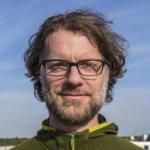
Voices of CIRES: Matthew Shupe
Voices of CIRES is an audio project highlighting the skilled and talented researchers at CIRES. As Director Waleed Abdalati likes to say, CIRES researchers do it all: they study everything from the surface of the sun to the center of the Earth—and everything in between. Split between 10 departments at CU Boulder and a variety of labs at the National Oceanic and Atmospheric Administration (NOAA), the work our researchers do is essential to society.
My name is Matthew Shupe, and I'm a Senior Research Scientist as well as a fellow of CIRES. I've worked at CIRES for 21 years I'm a polar climate scientist. So I look at the climate and the poles, mostly in the Arctic, and I in particular, look at the exchange and interaction between the atmosphere and the surface.
I got here through Arctic research, and actually it was associated with my undergraduate. I built an instrument and took that instrument to the field on an icebreaker in the Arctic. It was an amazing experience for a very young person. And while I was out there, I met some people from Boulder, affiliated with NOAA, and so that kind of got a foot in the door for me to come out and do some analysis of that data from this expedition into the Arctic sea ice.
So the ice caps project is another of my big activities, and that has extended from about 2010 through 2025 and this has taken place on top of the Greenland Ice Sheet. Well, in 2012 it melted at Summit Station Greenland. And that's really extraordinary. And some of the analysis we've done after the fact showed that, well, the last time it melted before 2012 was 125 years before that, and before that, it was another 800 years before that, very infrequent, but it melted there in 2012, and so we were like, wow, this is amazing, something's happening here. And now, since that time, it's melted many more times, right? So melt is reaching the very top of the Greenland Ice Sheet.
Greenland is one of the preeminent climate problems of our time, right is the biggest contributor right now of melting cryosphere to sea level rise, for example. So it's a really big climate problem. It's something we need to lean into. But unfortunately, right now, we're pulling our equipment out of Greenland, and we hope to get back there. Because we recognize that no matter how much we agree or don't agree with the perspective on climate change, it's going to keep going, and Greenland is going to keep melting, and it's going to keep having all kinds of implications for the globe.
I love a lot of things about my work. The biggest thing, and this, maybe is obvious to scientists, but less to maybe others, is the notion that I get paid to think, and that's it's really quite extraordinary to just think about the big problems we have, to think about the uncertainties we have, and then how you might design a way to solve those problems.
If we couldn't do our research, I think that this would have some pretty important implications for humanity. A lot of the work that I do is in the polar regions, in the Arctic, where there's a lot of change happening, and we need to understand that change from one perspective. We need to understand it for the future, right? How is this going to affect climate type, changes in our Earth system, sea level rise, change in the surface reflection, and the albedo of our Earth. Big things like that, but it also affects so many other aspects. Right? The changing sea ice in the Arctic. Affects resource development, it affects transportation, it affects ecosystems, and all these things matter to us.
Why do I want to keep doing this work? It is fascinating, and I think that's that's why my brain wants to keep trying to solve some of these problems. They're not solved yet, and until they're solved, it'll be hard to walk away.
Music from Blue Dot Sessions: Basketliner, Copper Halls, Lakal, and Preston Stomp.