CIRES Science Pathways Program
Get connected with a CIRES speaker to give a free talk at your institution

CIRES Science Pathways Program
Get connected with a CIRES speaker to give a free talk at your institution
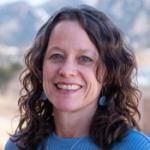
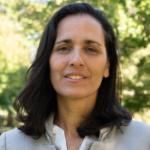
The CIRES Science Pathways Program collaborates with local institutions to host a CIRES member for a science and career talk at their location, free of cost. The program aims to build connections, lower barriers to work at CIRES, and expand the reach of CIRES’ science.
Post-talk reflections from students
"I liked the discussion of the path taken through school as it was a more nontraditional approach, which I feel many people can relate to."
"Every path is different, and scientists are multifaceted with lots of diverse talent. It opened up my eyes to new jobs and possibilities!"
"I found it really interesting when the speaker started talking about the way they got into their research."
Photos from the Science Pathways Program

Kari Bowen

Kai Kopecky

John Cassano
Host a CIRES speaker
The Cooperative Institute for Research in Environmental Sciences (CIRES) works to understand the dynamic Earth system, including people’s relationship with the planet. As an institute at the University of Colorado Boulder, we have partnered with the National Oceanic and Atmospheric Administration (NOAA) since 1967.
The CIRES Science Pathways program invites Colorado institutions to host a CIRES member for a science and career talk at their location free of cost, with the overall goals of building connections, lowering barriers to work at CIRES, and expanding the reach of CIRES’ science.
Selections will be made based on the speaker’s availability. Each visit will include a “flash talk” on the researcher’s science, a connection to the CIRES mission, and a career story that illustrates the researcher’s unique path to their current position. A question and answer session could be included to promote discussion with students about pursuing an environmental science career.
Alex Baron
Air quality and atmospheric chemistry; Observational tools and methods; and Climate — Weather balloon can be used to access the remote and harsh conditions of the stratosphere. There, the particles aloft in this atmospheric layer can stay elongated periods of time and impact the climate. Balloon-borne scientific instruments can asses changes in size, number and composition of these particle, deepening our understanding of stratospheric processes and narrowing down uncertainties for climate projections.

Nels Bjarke
Environmental data science; Natural hazards; Observational tools and methods; Science communication; Water; Weather and climate; and Wildfires — My science flash talk will focus on pathways into applied climate adaptation and hazard resilience research, with examples of how STEM degrees can lead into non-traditional academic research positions. In my talk, I will provide the narrative of my experience and pathway into the field of climate services, highlight examples of "usable" science, and discuss my perspectives on current and future opportunities in the field.

Drew Blauth
Air quality and atmospheric chemistry — What is in the air we breathe? In this talk, we will explore what the air we breathe is made out of, what natural and human activities put into it, and what you can do to improve air pollution. I will also describe the path I took to get to the work I am doing now, highlighting how personal experiences led me to environmental science research.

Kari Bowen
Weather and climate — My journey’s been anything but conventional, and I wouldn’t have it any other way. I kicked things off at a community college, eventually landing at a four-year university as an atmospheric science major. From there, I transitioned from a weather intelligence operator in the Air Force to a Meteorologist with the National Weather Service, then advanced to Director of Intelligence, and now I’m working as a Program Manager at a major earth science research organization. Along the way, I squeezed in an online Master’s degree and raised a few amazing kids. It’s been a whirlwind—and honestly, a pretty awesome one. I am looking forward to discussing unconventional paths in earth science and how everyone's river is unique.

John Cassano
Changes in polar regions; Observational tools and methods; and Weather — I'd be happy to talk about my path to becoming a scientist and professor from growing up in a blue-collar family and being the first member of my family to attend college. I'd also like to talk about my experience doing polar fieldwork (14 trips to Antarctica and six trips to the Arctic, including three months on the MOSAiC expedition). I have lots of fun photos, and a few videos, I can share that give a sense of what living and working in remote polar locations is like.

Audrey Gaudel
Air quality and atmospheric chemistry — The basic questions I am trying to answer is "Are there neighborhoods in New York City, Denver, Baltimore to name a few urban areas in the US, where people breathe more ozone, fine particulate matter or nitrogen dioxide, known to be dangerous for health, than other neighborhoods? How? Why? For how long?". To answer these questions, I am using instruments deployed to measure air pollution at "nose" level and I am using model output to understand the sources and the processes behind such air pollution and its detected inequity. I am working towards engaging with local marginalized communities to co-produce useful knowledge for air (e)quality.

Kai Kopecky
Observational tools and methods; Natural Hazards; Water; and Marine ecology — Many ecosystems have developed the capacity to recover from disturbance events, like storms or fires, but climate change is introducing new disturbance types that ecosystems may not be able to recover from. Coral reefs, in particular, can readily recover from tropical storm damage, but it is less clear if they are resilient to new forms of disturbance, like coral bleaching. Using cutting edge techniques in remote sensing and AI, I show that coral bleaching significantly compromises the ability of coral reefs to recover, but also that there are actions we can take to increase this ability.

Sam Lapp
Biodiversity conservation; and Observational tools and methods — All around us, animals are using sounds to communicate with each other. When we eavesdrop on wild soundscapes with tiny automated recorders, we can learn not only about the biodiversity of an ecosystem, but also about the individual lives and activities of its birds, frogs, and insects. Can we develop machine learning algorithms that will interpret natural sounds, and if we do, what will we learn?

Kyle Manley
Biodiversity conservation; Environmental data science; and Wildfires — Recreation in the Increasingly Burning US West: How Wildfire and Prescribed Fire Reshape Outdoor Recreation in Colorado and California. Fire is reshaping public lands across the western United States, but how does it change the way people use those places afterward? In this talk, I’ll show how we combined large-scale social data, machine learning, and causal inference to measure how both wildfires and prescribed fires affect outdoor recreation in Colorado and California.

J. Toby Minear
Natural hazards; Observational tools and methods; and Water — Using NASA water observing satellites to measure water on earth. In this talk, I will describe some of the work we do using NASA satellites to measure earth's surface water. These results are used to better manage water resources, estimate floods, observe wetlands and a whole host of other topics. With the recent launches of a new generation of NASA water observing satellites, there are now capabilities well beyond what we were able to do even five years ago.

Jianhao Zhang
Clouds and climate; Observational tools and methods; and Weather — The depiction of clouds has fascinated mankind for millennia by their complex, ephemeral shapes and subtle variations in color and texture with lighting. Besides their natural beauty, clouds are a central component of the Earth’s hydrological cycle and energy budget. They regulate how energy enters and leaves the earth by reflecting incoming sunlight (a cooling effect) and trapping outgoing terrestrial radiation (a warming effect). I will talk about how scientists have been using satellite, physics-based computer models, and Artificial Intelligence to advance our understanding of how clouds contribute to and are influenced by the changing climate.

Take your research on the road
The CIRES Science Pathways program collaborates with local institutions to host a CIRES member for a science and career talk at their location free of cost, with the overall goals of building connections, lowering barriers to work at CIRES, and expanding the reach of CIRES’ science.
Any CIRES researcher* or staff can apply to the program! These speaking engagements provide students, especially those without access to Earth and space scientists, an opportunity to be inspired by and learn from CIRES science. Whether you're a researcher, technician, or supporting science through scientific communication or research administration, this program aims to demystify what it looks like to work in science. We want a variety of backgrounds and various education levels (all are welcome).
Each visit will include a “flash talk” on the speaker’s work, a connection to the CIRES mission, and a career story that illustrates the researcher’s unique path to their current position. A question-and-answer session could be included to promote discussion with students about pursuing an environmental science career.
Benefits for CIRES Researchers
- Practice your talks with the Science Pathways committee and other Science Pathways speakers to receive valuable feedback
- Build your communication skills with coaching from the CIRES Communications team
- Connect with students and share your passion for your work
*Current CIRES graduate students must be in at least their second year of graduate school and need to get permission from their advisor. The SPP committee will provide a form for the advisor to sign.
- September 28, CU Denver College of Architectural and Planning talk for faculty and students, Nels Bjarke
- October 16, NOAA tour for undergraduate students in the Exploratory Studies Program at CU Boulder, Kari Bowen
- October 29, NOAA tour for CIRES graduate students, Jianhao Zhang